


Making pasta in-house changes how to open an Italian restaurant. The kitchen gains a morning production shift, a sheeter or extruder sized to daily covers, a basket cooker that turns fresh pasta in two minutes, and cold storage for today's pasta and tomorrow's ragù.
At ten in the morning the pasta cook has flour on the bench, eggs cracked into a well and a sheeter warming up. By seven that evening the tagliatelle cut at eleven is sitting in a chilled drawer under the pass, portioned into nests, and the only question is whether the cooker next to it can keep up. That split between a production kitchen in the morning and a service kitchen at night is the thing to plan around if you are working out how to open an Italian restaurant with fresh pasta on the menu.
Dried pasta from a good producer is not a compromise, and plenty of excellent trattorias serve it. Fresh pasta is a different business decision. The ingredients are cheap, the labor is not, and the equipment list shifts toward the pasta bench and cold holding rather than more burners.
What changes when an Italian restaurant makes its own pasta?
You add a second kitchen shift that produces stock rather than plates. Somebody has to make and portion the day's pasta before service, and that work needs bench space, a machine or two and a cold place to put the result.
Three consequences follow. The first is labor. A 60-cover room can fold pasta making into a prep cook's morning, but at 150 covers or more it becomes somebody's job. The second is space. Pasta production wants a clean, floured bench away from the hot line, because flour dust and a sauté station do not mix. The third is timing. Fresh pasta cooks in one to three minutes where dried takes eight to twelve, so the station moves faster and forgives less. The sauce has to be in the pan before the pasta hits the water.
The payoff is a menu nobody down the street can copy by opening a packet, and a food cost on the pasta itself that is among the lowest in the kitchen. Filled pastas, which cannot be bought dried in any form worth serving, become possible too.
Egg dough and semolina dough need different machines
Italian fresh pasta splits into two families, and they are made differently. Which one your menu leans on decides the first machine.
Egg dough is soft wheat flour and egg, rolled into sheets and then cut or filled. Tagliatelle and pappardelle start as a sheet, and so does every filled pasta from ravioli to tortellini. The tools here are a mixer, a sheeter to roll the dough thin and even, and cutters or a ravioli mold.
Semolina dough is durum wheat and water, pushed through a die rather than rolled. Rigatoni and bucatini are extruded, as are most short shapes. The tool is an extruder, and the die decides the shape and the texture, since rougher dies leave a surface that holds sauce better.
Both doughs are stiff and dry by bread standards, which matters when you choose the mixer. A planetary mixer with a dough hook running on its lowest speed handles egg dough in small batches, well under the bowl's rated capacity. Our comparison of a planetary mixer or spiral dough mixer explains why the spiral is the better tool for wet pizza and focaccia doughs but not for pasta.
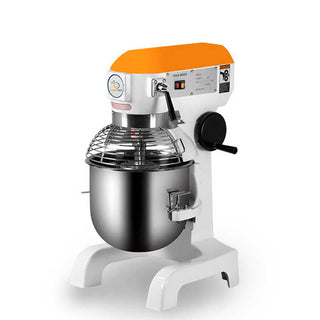
This mixer comes with 10, 20 or 30 L bowls and three speeds, with a dough hook among the attachments. The mixers collection has spiral and industrial models if the kitchen also bakes bread.
Sizing pasta production to covers per day
Work out how much pasta the kitchen makes in a day before choosing a machine. Assume roughly half of your covers order a pasta dish, and about 120 g of fresh pasta per plate plus a margin for trim and dusting. The table below runs that through three room sizes. Treat the figures as planning estimates, not rules.
| Covers per day | Pasta plates | Fresh pasta to make | How it gets made | Morning production | Service cooking | Cold holding |
|---|---|---|---|---|---|---|
| ~60 | ~30 | ~4 kg | Planetary mixer, benchtop roller, hand cutting | 1.5–2 hours of a prep cook | Two or three baskets in use at once | One GN drawer or shelf in the line fridge |
| ~150 | ~75 | ~10 kg | Motorized mixer-cutter for long shapes, sheets rolled for filled pasta | A pasta cook's morning | Six-basket cooker running most of the rush | Drawer chiller under the pasta station |
| ~300 | ~150 | ~20 kg | Mixer-sheeter plus an extruder for short shapes | A dedicated pasta cook, sometimes two | Six-basket cooker plus a second water bath or boiler | Drawers at the line, blast freezer for filled pasta |
The jump from the first row to the second is where most restaurants buy their first real pasta machine. Four kilograms is a comfortable hand job; ten kilograms rolled by hand every day wears out a cook and produces uneven sheets. At three hundred covers the question changes from "which machine" to "which two", because sheeted and extruded pasta need separate tools.
Machines for the pasta bench
Most of the pasta machines in our catalog were designed around Asian noodles, and the mechanics carry over to Italian pasta. What you need to confirm before ordering is how the machine copes with an egg dough and which dies or cutters come with it. We can check both with the supplier for a specific menu.
For a mid-size room making long cut pasta every morning, a mixer-cutter takes flour and liquid in one end and produces cut strands at 25 to 35 kg an hour, with interchangeable cutters for round and flat widths.

For filled pasta and lasagna you need wide, even sheets. A mixer-sheeter with rollers 260 mm long and 168 mm across produces sheets wide enough for a ravioli mold and rated at 80 to 100 kg an hour, which is more than a single restaurant needs. It is the right size for a group or a busy room that also sells fresh pasta to take home.
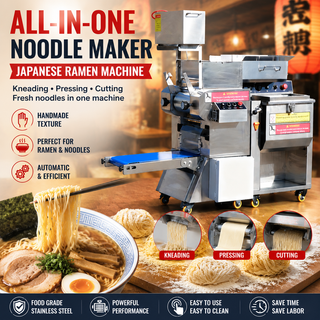
Short extruded shapes need an extruder. This vertical model presses prepared dough through interchangeable molds at up to 60 portions a minute. The listing does not name the dies, so ask which ones ship with it.

More options, including machines that mix and extrude in one unit, are in noodle and pasta machines.
How do you cook fresh pasta fast enough for a full room?
With a dedicated pasta cooker that holds each portion in its own basket, placed right beside the burners where the sauce is finished. One large pot on a range works at thirty plates a night and falls apart at seventy, because every order waits for the water to come back to the boil.
A basket cooker keeps a large volume of water at a rolling boil and lets the cook drop and lift each order separately. A table of four with four different pastas lands together, which is the thing a single pot can never do.

This cooker runs six baskets on 9 kW, in gas or electric. Recovery matters more than basket count. Fresh pasta drops the water temperature less than a large portion of dried, but on a busy night the water also gets starchy and has to be topped up or changed partway through service. A cooker with an overflow and a fast refill keeps the water clean enough that the pasta does not come out gluey.
The sauce side of the station is the range. Every pasta plate is finished in a pan, tossed with its sauce and a splash of the cooking water, so the number of burners caps how many pastas can be in progress at once. A six-burner range with 6 kW burners gives you room for four pasta pans in flight and two pots of sauce held warm.

Flame-failure protection on each burner is worth insisting on in a line this busy. The steamers and pasta cookers and gas ranges collections have the alternatives, including electric ranges for kitchens without gas.
Sauces run on a different clock
Pasta is made in the morning and cooked in two minutes. The sauces behind it take hours, and a ragù started at service time will not be ready for service.
The long sauces belong in the oven, not on the range. A ragù or a braise can cook slowly in a combi oven overnight at a low, steady temperature, which frees the burners in the morning for tomato sauces and stocks. The same oven bakes lasagna and other baked pastas in full trays during the day.
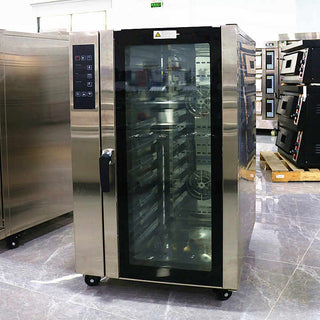
This gas combi holds eight trays and cooks with dry heat, steam or both. If you are deciding between a combi and a simpler oven, our guide to combi oven vs convection oven sets out where the steam function earns its place. The combi and convection ovens collection has the range.
Cooling is the part that gets skipped. A ten-liter pot of ragù left on the side takes hours to pass through the danger zone, and putting it straight into a reach-in warms everything else on the shelf. A blast chiller brings cooked food from 75°C to 3°C in about 90 minutes, which keeps a batch-sauce kitchen inside its food-safety plan.
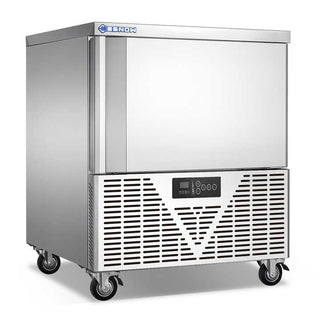
The same unit freezes, which matters for filled pasta. Ravioli and tortellini frozen quickly on trays keep their shape and go straight from freezer to boiling water. Our guide to choosing a blast freezer or commercial freezer covers sizing.
Holding fresh pasta between morning and the rush
Fresh pasta needs to stay cold and dry between the bench and the pot, with portions kept apart. Portioned nests of cut pasta sit on trays dusted with semolina so they do not stick, and most kitchens aim to use egg pasta within a day or two of making it and freeze anything that will not be.
The best place for the day's pasta is directly under the station that cooks it. An undercounter drawer chiller keeps GN pans at 0 to 5°C with the worktop above, so the cook pulls a portion without turning around.
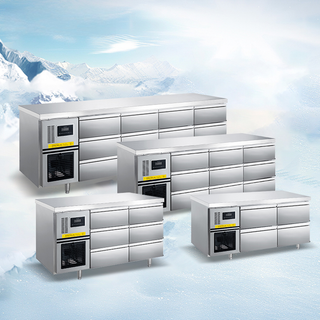
This model takes four full-size GN pans in four drawers, 350 L in all, on a 1370 mm footprint that fits under a standard pass. Drawers keep delicate pasta flat and visible in a way that reach-in shelves do not. See undercounter and worktop refrigeration for other layouts.
Bulk storage for eggs and dairy, and for the next day's sauce base, still needs an upright reach-in or a walk-in. Keep the pasta drawers for pasta and garnish only, or they fill up with everything else by the second week.
Laying out an Italian kitchen around the pasta station
The pasta cooker and the range should sit side by side, with the pass one step away. A cooked portion moves from water to pan to plate in under a minute, and every extra step costs heat and time on a dish that is judged by how hot and glossy it arrives.
Put the production bench somewhere else. It needs space in a cool corner away from steam, and it works on a morning rhythm while the hot line is still cold. Keep the machines and drying racks together there, with the blast freezer close by for filled pasta.
Plan the pan wash early. Every pasta order dirties a sauté pan as well as a bowl, so an Italian kitchen washes far more pans than a grill kitchen with the same covers. A hood-type machine like the commercial hood type dishwasher keeps pans turning, and our guide to choosing a commercial dishwasher goes through sizing.
Wine usually decides the front of house. Most Italian restaurants sell it with nearly every table, so a dual-zone cabinet such as the 166-bottle dual-zone wine refrigerator keeps reds and whites at serving temperature in the dining room. More sizes are in wine cabinets. If pizza is as important as pasta on your menu, our guide to opening a pizzeria covers the oven and dough side, and pizza ovens has the equipment.
Licenses for an Italian restaurant, in the order to apply
You need an alcohol license to serve wine and a registered food business with a hygiene plan. The premises also need fire approval. The order you apply in matters more than the list, because the alcohol license is the slowest almost everywhere.
- Start the alcohol license first. In the UK that is a Premises Licence from the local council plus a Personal Licence holder as Designated Premises Supervisor, qualified through the APLH award; hot food served between 11pm and 5am is covered under the same Premises Licence as late-night refreshment. In the US it is a state liquor license through the Alcohol Beverage Control board, the slowest step of the project and sometimes quota-capped. In Australia it is an on-premises liquor licence from the state or territory regulator, and every staff member who serves alcohol needs a current RSA card. In Italy alcohol service sits within the food-and-drink activity you declare, and the separate customs fiscal license step for alcohol was removed in January 2026.
- Settle the premises before you sign. In Italy the activity is opened by filing a SCIA through the local SUAP one-stop business desk. In the US the space needs a certificate of occupancy after building and fire inspections, plus a business license and an EIN. Australian councils give premises approval and may require a fire safety statement. In the UK a fire risk assessment is required for the premises.
- Register the food business and write the hygiene plan. UK restaurants register with the council at least 28 days before opening and receive a public Food Hygiene Rating after inspection. US restaurants need a health department permit and a manager with ServSafe or equivalent certification. In Australia you notify the council and, in some states, appoint a Food Safety Supervisor. In Italy the operator needs the SAB food-service qualification and an HACCP plan. Whatever the market, the plan should cover raw egg handling and the cooling of batch sauces, since those are the two steps an inspector will ask about in a fresh-pasta kitchen.
- Plan the till around the rules. In Italy, POS systems that issue electronic receipts have to connect directly to the telematic cash register from 1 January 2026, so check that the system you choose supports it. Elsewhere the till matters for tax records rather than licensing.
This is an overview rather than legal advice. Requirements change and vary from one council or state to the next, so confirm the details with your local authority.
Pasta kitchen decisions that come back at 8pm
Most problems in a fresh-pasta kitchen are decided at the planning stage and only show up once the dining room is full.
| Decision | Tempting shortcut | What holds up at service |
|---|---|---|
| Cooking pasta | One big pot on the range | A basket cooker, so every order in a table's ticket lands together |
| Rolling dough | Hand rolling at 150 covers to save on a machine | A sheeter or mixer-cutter once daily output passes about 5 kg |
| Mixing dough | Using the pizza spiral mixer for egg pasta | A planetary mixer on low speed, or a pasta machine with its own mixer |
| Cooling sauce | Leaving ragù to cool on the side | A blast chiller that brings batches down to 3°C in about 90 minutes |
| Storing pasta | Shelving it in the general reach-in | GN drawers under the pasta station, used only for pasta |
| Washing up | Sizing the dishwasher to plates only | Counting one sauté pan per pasta order as well |
For the parts of the build every restaurant shares, from extraction to the dining room, our guide to opening a restaurant is the place to start.
Building a kitchen around fresh pasta? Tell us your covers per day, the shapes on your menu and how much space the production bench gets, and we will match the production kit and the cooker to it, along with the cold holding.


