

Nightclub equipment and supplies for a room that does its whole trade in four hours — line array sound, lasers and effects, bars built to serve a surge, and glasswashing that keeps up with them.
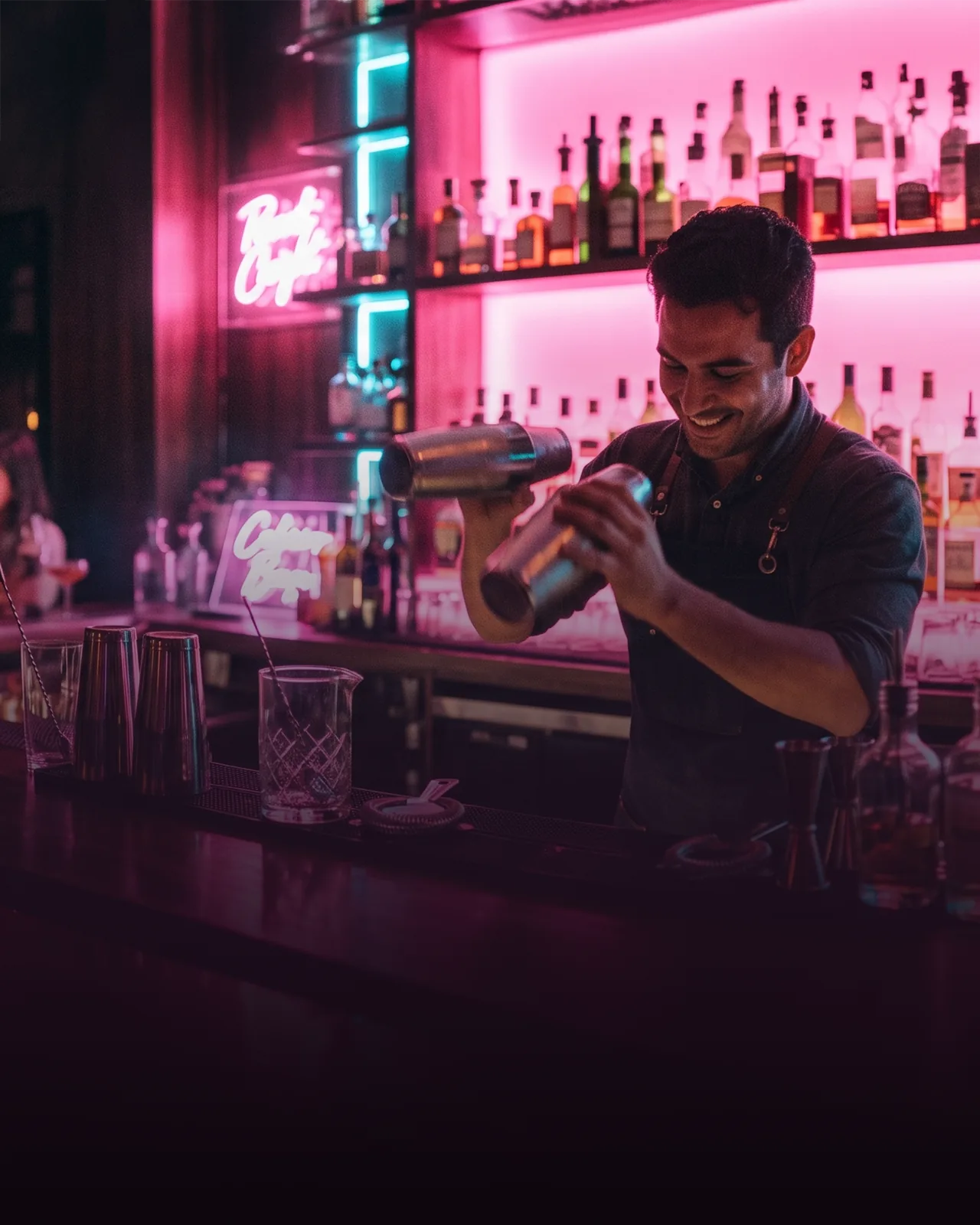
A club sells two things: drinks at speed and a room that feels like an event. The setup splits along that line — a bar built to clear a queue in the ten minutes after a set change, and a sound, light and effects rig that carries the rest.
Quantities assume a 300-capacity room with two bars and one dance floor. Glassware is picked separately, since a club's glass is a durability decision as much as a design one. Send your floor plan and the capacity you are licensed for, and we adjust the counts before quoting.
200 cm
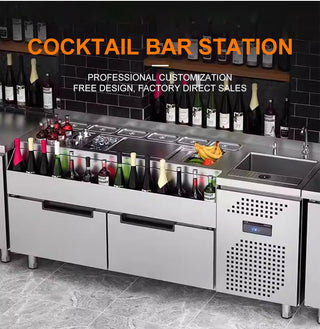
Two refrigerated underbar stations built to your counter lengths. Wells, bottle pockets and ice within one step, because a bartender who takes two steps per drink halves the bar's output.
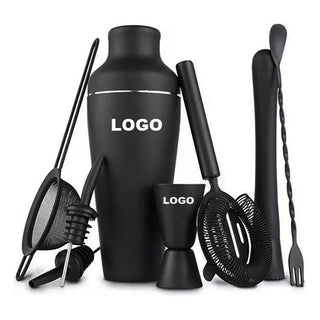
Black - Shaker
Full kits across both bars plus spares — a club loses more small tools in a month than a restaurant does in a year.
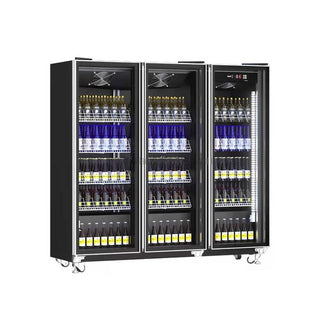
One three-door cooler per bar for bottles, cans and mixers, lit and in the guest's eyeline.
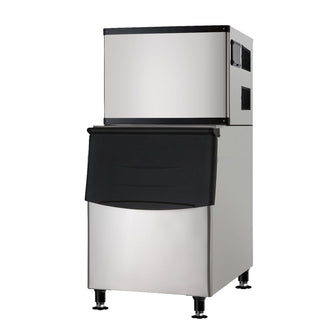
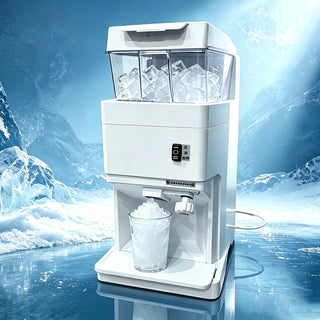
450 kg a day with a 125 kg bin. Ice is the first thing a club runs out of, and running out at midnight closes half the menu.
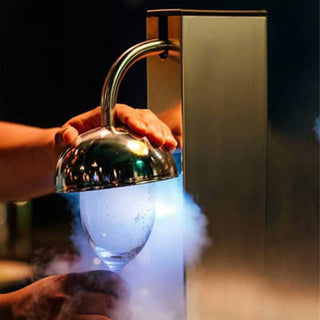
A club pours shots faster than a freezer can chill glassware, and CO2 does it in the seconds between them.
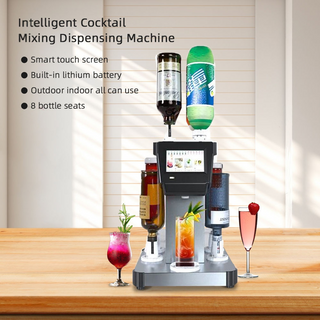
Half a club's drinks are a spirit and a mixer, and bottles cannot keep up with that on a Saturday.
8 bottles
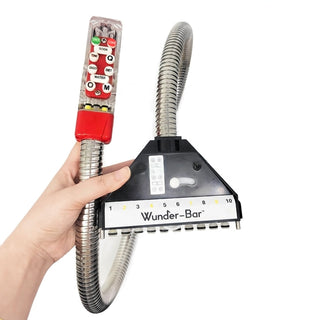
On a busy floor it turns the two or three most-ordered drinks into a button, which is where the queue actually forms.
Shots at speed are the margin in a club, and pouring them cold from a tap beats reaching for a bottle in a fridge.
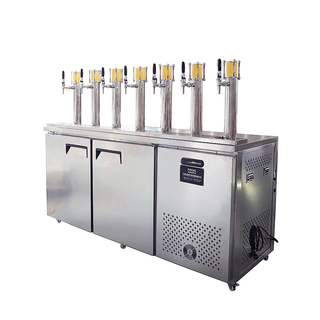
Draught on the main bar, so beer stops being a bottle out of a fridge.
Crushed ice for the long drinks that carry a club's late hours.
Shelf with end panel and cabinet • 240x20x295
Bottle display is what a club sells at the top of its list, and the rack is what puts it where the table can see it.
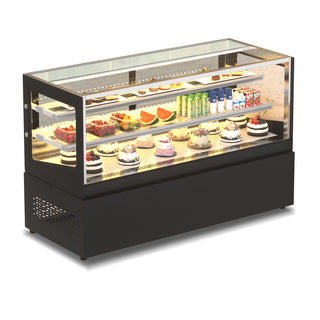
Straight Front / 120cm Floor Model
A lit glass-door fridge on the back bar — visible stock is faster to pour and it sells itself.
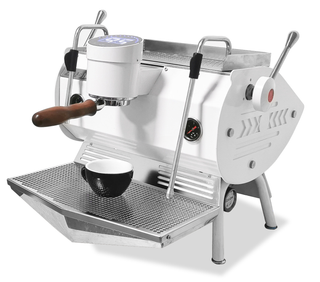
2-Group
The espresso martini is the drink a club sells at one in the morning, and it needs a machine rather than a bottled mix.
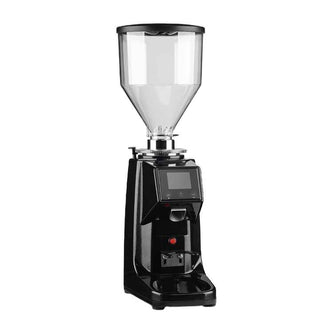
The espresso martinis carry the back half of the night, and the staff still there at four drink the rest of it.
A robotic bar as an attraction rather than a labor saving — it is a photographed centerpiece that also pours.
Sliver
Second chiller format for the VIP bar, adjustable down to a lower serving temperature.
Champagne held ready for bottle service, at temperature rather than in an ice bucket for an hour.
50 kg/h — pellets
Dry ice made on site for bottle presentation and for the smoking serves.
Table service is where a club makes its margin, and the booth is the table that gets sold.
In the VIP area the furniture is part of the light show, which is most of what the table is being paid for.
Whiskey Glass 6PCs
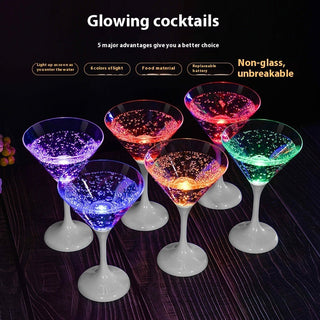
In a dark room a glowing glass is what makes a serve visible from across the floor, which is the entire point of ordering it.
QQ-100ml
A club goes through them at a rate nothing else matches, and every one is a logo in somebody's hand.
With the light coming off the floor, these are the only surfaces people can see well enough to put a glass down on.
Stools for both bars and the high tables between them. Velvet reads under coloured light in a way plastic does not, and a club is lit in colour all night.
Blue
Touch-reactive luminous cups for the signature serve. A club's signature drink has to read from across a dark floor, which is a lighting problem rather than a recipe one.
28cm black
A tray of full glasses crossing a dance floor needs the rubber face, because the floor is wet and the crowd does not move.
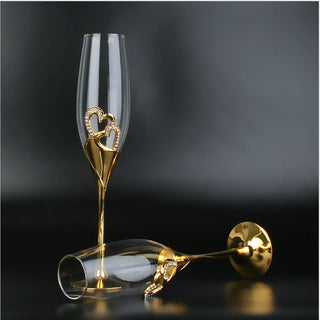
The glass a bottle-service arrival gets poured into. The table paid for the walk across the room, and the glass is part of what they paid for.
In a hazed room this is the effect that reads from every angle, and it sets the look of the floor more than the lighting rig does.
P-400U
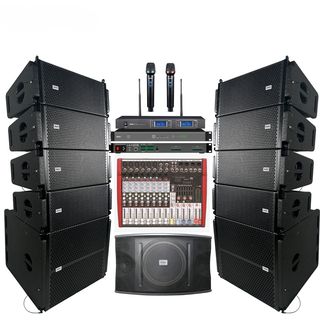
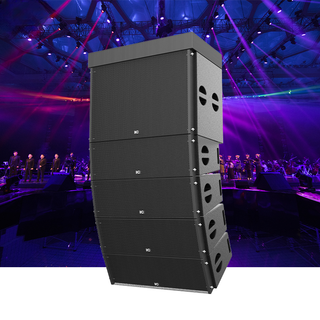
Full-range line array with subwoofers — even coverage across a floor instead of a loud spot in front of the booth and nothing at the back.
2 × 1500 W Class-D amplification, stereo or bridged. Under-powered amps clip and clipping is what kills drivers on a long night.
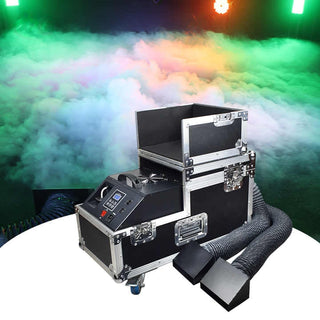
3000 W low fog with tubes — low-lying haze that makes beams visible without filling the room to the ceiling.
DSP matrix for crossover, delay and limiting — the piece that protects the rig and makes the room sound tuned rather than loud.
White
Bottle service arrives with one of these, and they are indoor-safe in a way the sparklers they replace are not.
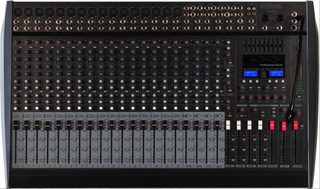
Sixteen channels with phantom power for live acts, MCs and the nights that are not a DJ alone.
64 px
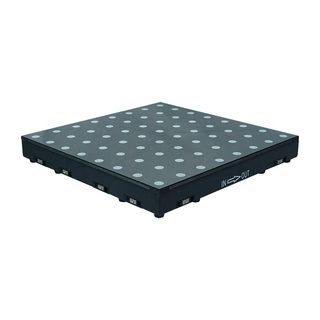
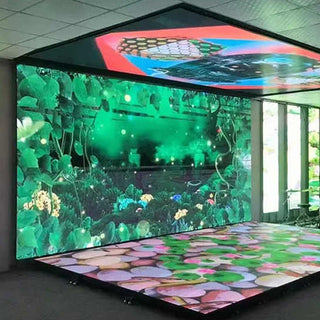
RGB panels laid as a floor — 24 panels build a compact dance area that becomes the room's centerpiece and its lighting at once.
Special effect oil 4*3L
Vortex cannons fire a ring across the room on a beat, which makes them a cue rather than a fog effect.
Color Smoke Liquid 2L/Bottle
Coloured fog jets for drops and for the moments the lighting rig needs a body to cut through.
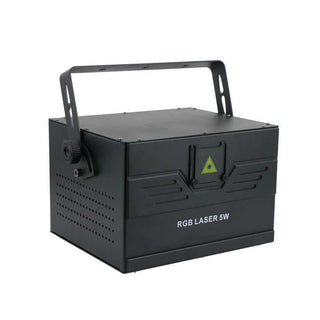
Moving-head animation lasers, so the beams move with the set rather than sitting in one place.
In a full club the choice is between atmosphere and stale air, and the HVAC is where that gets decided.
Active line array boxes for the dance floor, above the fills already in the room.
Black Curved grille light -6W / 3000K
House light for the parts of the room the lasers never point at — the bar, the booths, the route to the cloakroom. One dimmable rail runs both the nine o'clock room and the two o'clock one.
One dual-screen terminal per bar with a printer, running standard Android POS software so pricing and tabs stay yours.
65 inch Mirror - 43 inch Screen
Every print leaves the building with the club's branding on it, which is advertising guests queue up to collect.
White-4*6 inch thermal paper(6 rolls)
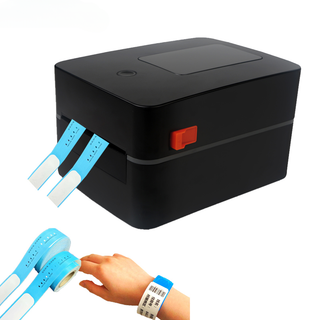
Wristband printing on the door for re-entry, age checks and guest-list tiers — five units cover a multi-lane entrance.
49 inch(124.46cm)
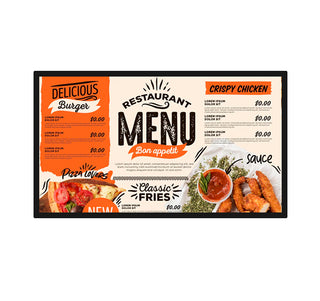
Touchscreen menu boards at the entrance and the bars, changed from a phone when the list changes.
Printed membership and guest-list cards, alongside the wristbands.
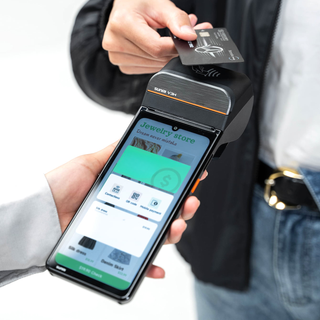
Handheld terminals for table service, so a VIP order is taken at the booth.
23.8 inch
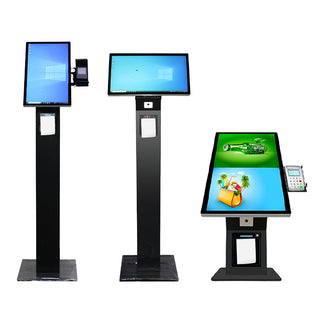
A payment kiosk on the door for cover charges, so the entry queue is not waiting on one card machine.
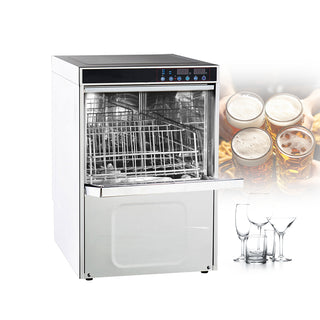
A club has to return glass at thirty baskets an hour or it runs the night on disposables.
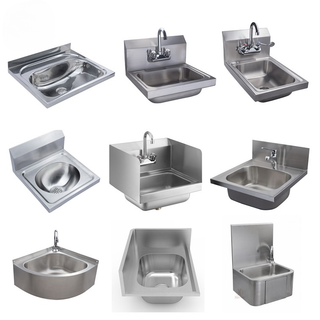
An inspection on a licensed room looks for these at both bars and in the back, and it looks for them first.
A club empties its glassware three times an hour, which one under-counter machine cannot follow.
Stainless Steel 304
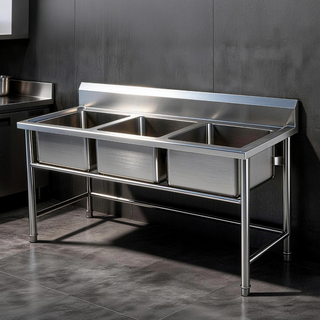
Shakers, jugs and the pieces a machine cannot take wash here, and on a club bar that is most of the kit.
40 ton
A club's waste is glass, cans and delivery cardboard arriving in one overnight surge. A baler compresses it into stackable bales so the yard is clear before the next trading night.
Undercounter cold at each bar station for garnish, mixers and pre-batched serves.
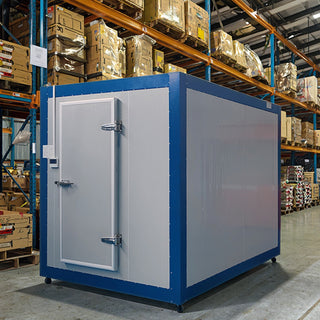
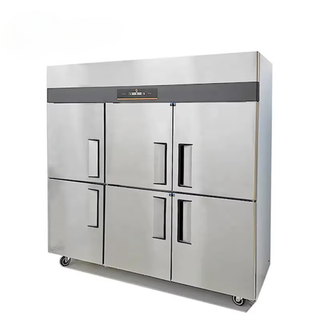
A club takes a week of stock in one delivery, and there is no second delivery on a Saturday.
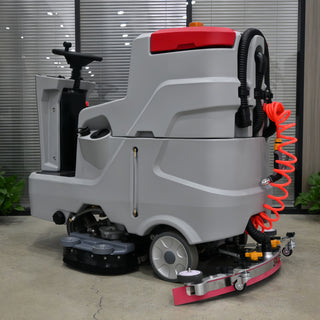
A club floor after a Saturday is not a mop job, and the cleaner who has to do it by hand does not come back.
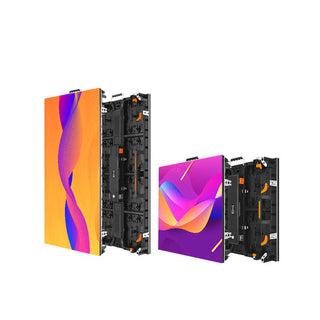
Six modular panels behind the DJ booth — one seamless wall instead of a grid of televisions, and the backdrop for every clip filmed in the room.
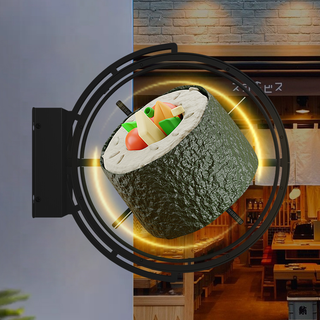
A club gets found in the dark from across a street, and the sign does that job rather than the door.
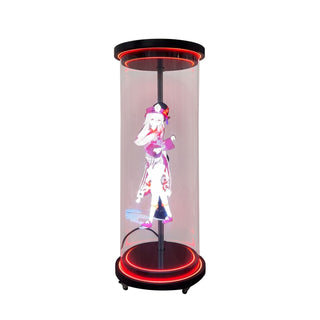
Holographic fans over the bars and the entrance — a floating image with no bezel, which reads in a dark room where a flat screen looks like a rectangle of glare.
1-Color / Standard Optics 15°
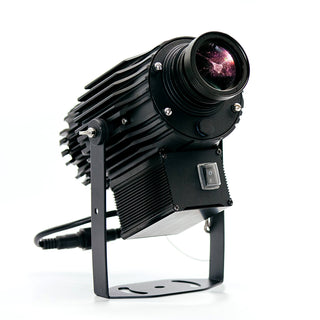
80 W rotating gobo projectors for the logo, the pattern wash and the branding that lands in every photo taken on the floor.
The walls are the backdrop every photograph out of the club is taken against, and neon is what makes them read at all.
Lit backdrops for guest nights and brand takeovers, swapped with the artwork.
110 cm
Hologram fans for floating visuals over the bar or the entrance — cheap spectacle that photographs far better than it costs.
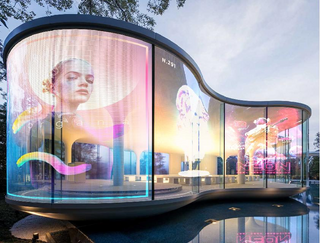
Panels hung inside the glass, so the frontage is a building by day and this weekend's line-up after dark.
Touch-reactive LED panels for a wall or a secondary floor, where the visual responds to the crowd.
A volumetric sculpture is a flagship line rather than a fit-out item, and it sits here because a club that wants one wants it from day one.
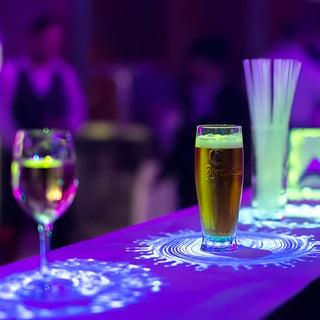
Projected visuals across the bar counter surface — the drink lands on a moving image. It is the detail guests film.
Air sterilisation for a windowless room at capacity. Six hundred people, no openable window and a fog machine running is an air-handling load nothing else on this list addresses.
Frozen back-stock for both bars: fruit, batched purees and the bagged ice that covers the hour the machine cannot keep up with.
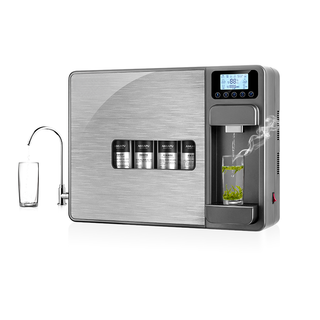
Filtered feed for the ice machine that supplies both bars. A club's entire ice demand lands inside four hours, and scale takes capacity out of exactly that window.
A club buys glass by breakage rate, not by shape — and plenty of rooms run polycarbonate on the floor and real glass in the booths. We stock the range and price it with the rest of the order.
Catalog prices at the quantities listed, excluding shipping, duties and installation. Send a request and we confirm current pricing and lead times for your build.
Request received
We are pricing the setup now and will come back with a quote and lead times, usually within one business day.
That did not go through
Something broke on the way to us. Try again, or write to sales@barequip.pro and we will pick it up from there.