

Butcher shop equipment built around a counter people buy from by eye: display that holds colour, grinding and slicing sized for a day's trade, vacuum packing that reaches past the shop door, and the cold chain underneath all of it.
A high-street butcher breaking down and selling on the premises, with vacuum packing for wholesale and online orders on top. The list follows the meat: cold store, prep, counter, pack.
Quantities assume one serving counter and one prep room. Tell us your counter length and whether you make sausage on site, and we size the display, the grinder and the freezing against it before quoting.
Meat is bought by colour and colour is a lighting decision, so the counter gets high-output linear spots rather than whatever the ceiling came with.
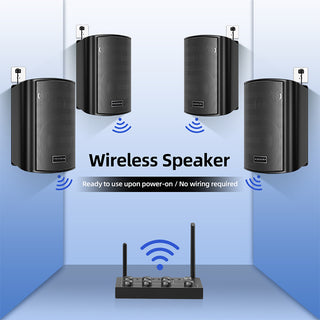
6.5-inch speaker for LS-02 white
A butcher's is a queue at eleven on a Saturday, and a silent room makes that wait feel twice as long as it is.
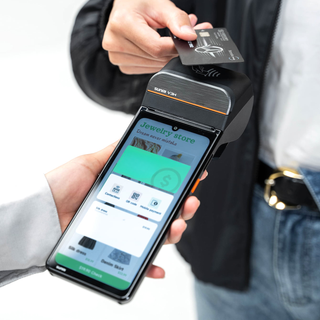
Butchery sells by weight, which means the till and the scale have to agree. A dual screen shows the customer the weight and the price as it lands.
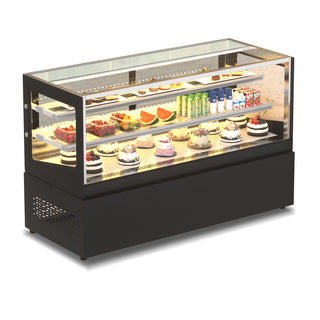
Straight Front / 120cm Floor Model
The counter IS the shop. Everything a butcher sells is bought by eye, and colour holds only if temperature and humidity do.
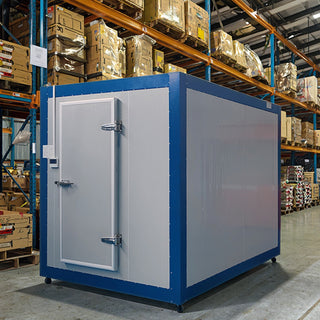
A butcher buys by the carcass and hangs it, which a reach-in cannot do. Those are for what has already been portioned.
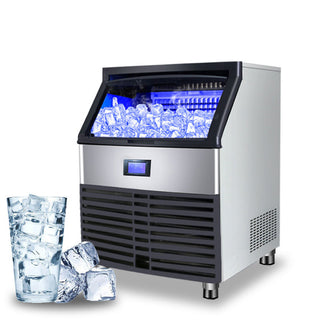
100 kg/24hours
Ice under the open display and in the box a customer carries home. Meat loses colour long before it loses safety, and colour is what the counter sells on.
Handhelds with a built-in printer, so a weighed order is priced and paid at the counter rather than at a fixed till.
A butcher's customer carries a heavy order out every week, and that bag gets seen far more often than the shopfront does.
Countertop freezer merchandisers for the frozen and prepared lines, sat on the counter rather than behind it.
3150L
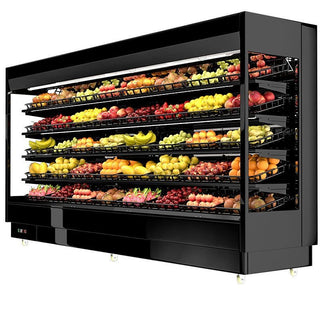
An open chiller for marinades, sausages and ready-to-cook alongside the served counter.
Adjustable 3–8 mm covers everything from carpaccio to steak-cut cold meats. The slicer is what turns a whole muscle into a counter's worth of price points.
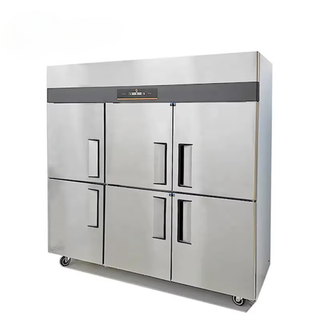
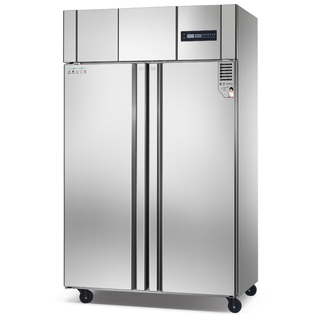
Reach-in freezing for portioned stock and trim held for sausage. Multi-door means opening one section without warming the rest.
Stainless Steel 304
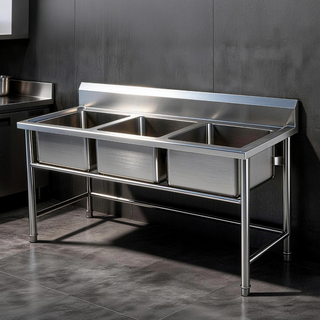
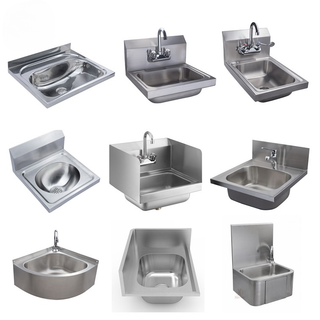
The inspector checks the wash, rinse and sanitise sequence specifically in this trade, and three bowls is what lets you show it.
Raw meat gets cut at the block and again in the back, and each of those positions needs its own sink to satisfy an inspection.
The working day's stock, kept out of the walk-in. A butcher opens the walk-in to hanging carcasses and cannot have someone in and out of it every five minutes for a tray of sausages.
Dry ageing is where a butcher's margin actually sits — the same primal sold weeks later at a different price. Controlled humidity and UV are what make those weeks ageing rather than spoilage.
Extraction over the smoker and the cooking bench at the back. Smoke has to leave the building rather than settle on a counter people buy from by eye.
3 trays
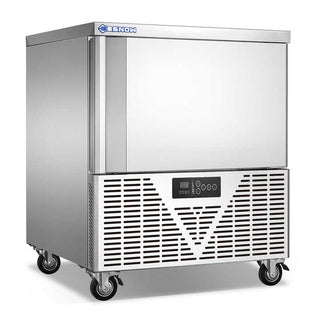
Getting portioned meat through the freezing range fast is what protects texture — slow freezing tears the cell walls and the thaw shows it.
Frozen slicing for hotpot and shabu cuts, which sell at a premium and cannot be done on a standard slicer without tearing.
Knives move between species all day here, and a sterilising cabinet is the cheapest answer to the cross-contamination question when it gets asked.
Bone dust, trim and washdown waste, continuously, from the moment the shop opens. Continuous feed means not stopping to empty anything mid-service.
A heavy double sink for trays, tubs and block hardware. Butchery washes large, awkward, greasy items that never fit a machine and never come clean in a single bowl.
100 Type
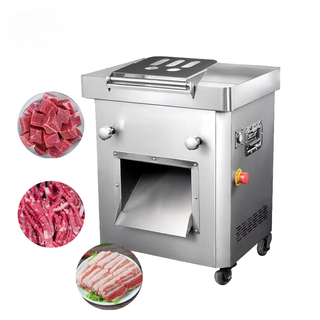
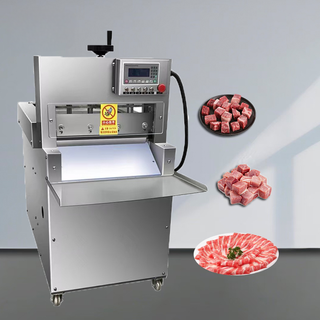
Slices, shreds and dices the stewing and diced side of the counter. It is the line a butcher sells most of by weight and would otherwise cut by hand all morning.
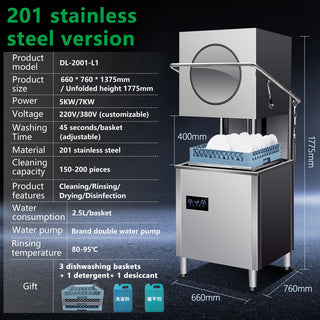
201 Stainless Steel
Trays, tubs and boards through a hood machine. A butchery washes fat off everything it touches, and fat is what a sink at hand temperature leaves behind.
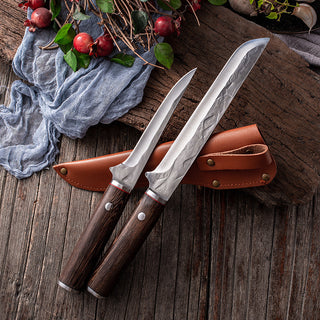
Boning knife
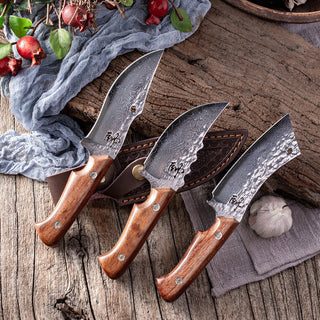
Four is a working set: one per person on the block plus the one on the steel at any given moment.
6 rolls
Rolled frozen beef and mutton cut to thickness — the hot-pot and barbecue trade a butcher sells to restaurants.
On a delivery day two people bone at once, and the second blade is what stops the carcass waiting for the first.
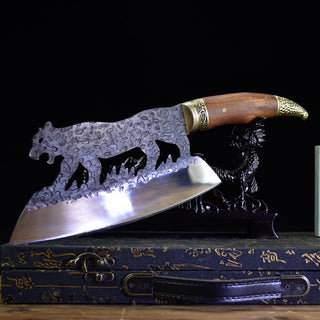
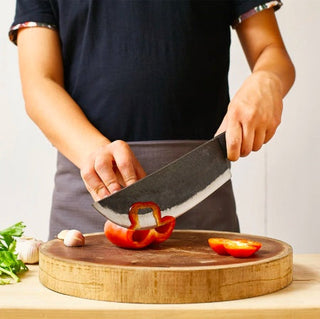
A hand-forged cleaver for jointing, where a boning knife stops being the right tool.
450L • 9 Drawers
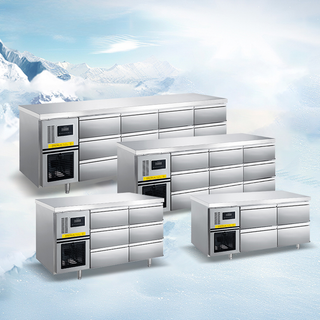
Drawer refrigeration under the cutting bench, so trimmed product goes cold immediately.
Airborne load is what shortens shelf life in a butchery, and treating the air over the cutting room costs less than the product it saves.
UV and ozone for knives, steels and small equipment between shifts. In a butchery the same blade goes through pork and poultry in a morning, and the cabinet is the answer to how that is separated.
Hand-forged boning machetes for breaking carcasses — the heavy end of the knife roll.
Style A
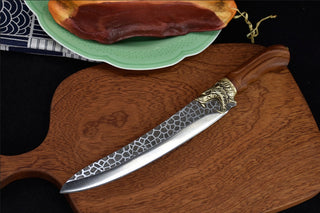
A butcher sells the knife alongside the cut, and a damascus steak knife on the retail shelf carries a margin nothing in the counter can match.
40*60cm (15.75*23.62in)
Prices move with the market weekly here, and a backlit board gets reprinted for the cost of a sheet.
A butcher's window is full of product rather than signage, so the name has to sit above it and read from across the road.
The daily-special board stands at the kerb and charges itself, which means no electrician and no cable run across a pavement.
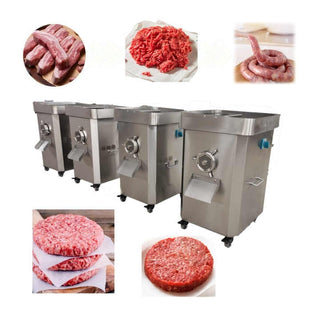
500 kg/h is a shop's daily mince plus sausage production without the grinder becoming the bottleneck. Mince is the highest-turnover line in most butchers and the one customers judge on colour.
Air cooling
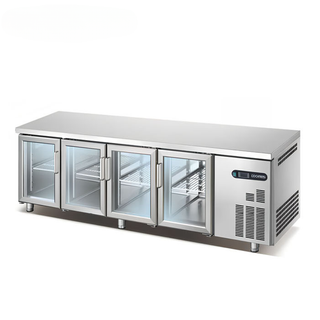
Breaking down a carcass needs cold under the work surface, not across the room. Four doors keeps a day's cuts at hand and at temperature.
YPC-2D-B-3 • 30W
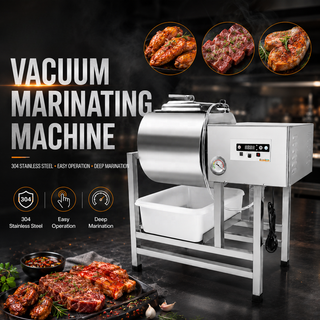
Vacuum tumbling for marinated and ready-to-cook lines, which is where a butcher's margin now is.
60 L smoker for bacon, sausage and the hot-smoked lines a counter sells at three times the raw price.
1000L
A jacketed kettle for stock, rillettes and rendering — the way trim turns into a second product line.
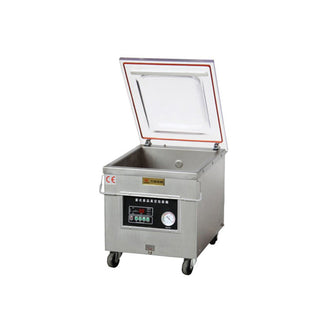
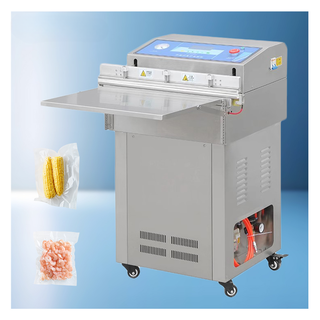
Vacuum packing is what lets a butcher sell beyond the counter — wholesale, online, and the customer buying for a freezer. It also buys back shelf life on a slow cut.
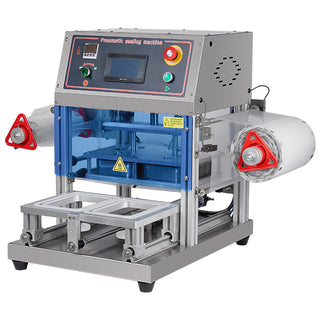
Modified atmosphere in a sealed tray lets a butcher sell packed retail cuts with a real shelf life rather than same-day only.
Seal and shrink in one pass for retail-packed portions. It is what lets a butcher put a tray on a shelf in a farm shop rather than only over his own counter.
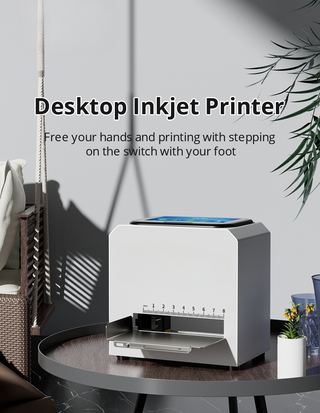
Anything leaving pre-packed carries a batch and use-by code by law, and that code is what a recall traces back through.
Printed boxes for the prepared and BBQ-box lines. Those boxes go to someone else's garden and get opened in front of a dozen people who did not choose the shop.
600 mm seal bar for long cuts and whole primals — the 30 cm chamber machine cannot take a rack.
A butcher's bag is heavy and wet at the bottom, and a die-cut handle is what gets it as far as the car.
Banded cartons for the wholesale run. A restaurant ordering by the box needs it stacked and secured on a trolley, not carried out in armfuls.
Pack and use-by dates coded onto the tray, because a supermarket buyer asks for them before anything else.
Laser floor marking to separate the raw side from the packed side on the floor itself.
Catalog prices at the quantities listed, excluding shipping, duties and installation. Send a request and we confirm current pricing and lead times for your build.
Request received
We are pricing the setup now and will come back with a quote and lead times, usually within one business day.
That did not go through
Something broke on the way to us. Try again, or write to sales@barequip.pro and we will pick it up from there.