

In short: place the tandoor first. The rest of how to open an Indian restaurant follows from it: a kitchen that cooks gravies in bulk each morning and times every bread to land with its curry. A south Indian menu swaps much of that kit.
Saturday, quarter past eight. Table twelve's butter chicken has been sitting on the pass for ninety seconds, and its garlic naan has not gone into the tandoor yet, because the tandoor cook is still loading skewers for table nine. By the time the bread arrives, the curry has a skin on it. Nothing in that scene is a cooking problem. The recipes are fine; the kitchen was built in the wrong order.
Most restaurant formats can be planned from the dining room backwards. An Indian kitchen is better planned from the tandoor outwards, because the oven fixes the extraction, the gas supply and the floor, and the rhythm of the whole line bends around the one station that bakes to order at the last possible moment. Around it sit two other systems a newcomer tends to underestimate. One is the gravy cooked in large batches hours before service; the other is the timing that brings bread and curry to a table together.
Why the tandoor is the first thing to place
The tandoor decides more about the building than any other item in the kitchen. It is heavy, it throws a column of heat and smoke every time the lid comes off, and it needs a gas connection sized for a large burner. Each of those has to be answered before a lease is signed, not after the fit-out drawings are done.
Start with the room. A unit on an upper floor or an old timber structure may need an engineer to confirm the floor will carry a clay oven. The extraction duct has to reach the outside by a route the landlord and the neighbors will accept. And the gas supply has to carry the tandoor plus a range of high-output burners at the same time, which is a bigger demand than many former cafes and shops were ever connected for.
Then place the oven inside the kitchen. The tandoor cook stands square to the mouth with skewers and dough on one side and the pass a step away on the other, and the rest of the line is arranged to feed that station.
A round, clay-lined gas unit like this one covers most new openings. It is 560 mm across with a 75 MJ/hr burner on natural gas or propane, and it stands on castors so the corner behind it can be cleaned.

Whether to run gas or charcoal, one large oven or two small ones, and how to cure the clay before the first service are big enough questions to deserve their own treatment; the tandoor oven collection shows the bodies side by side.
How do you time bread so it reaches the table hot?
Fire bread last. A naan is at its best for a few minutes after it leaves the wall, so the tandoor cook bakes it when the curry for the same table is being finished, not when the order comes in.
That is harder to run than it sounds, because skewers take far longer than bread and both compete for the same wall. Busy kitchens run a two-speed tandoor. Skewers go in as soon as a ticket lands, and bread for that table waits until the pass calls "bread for twelve" as the curries reach their final minutes.
It needs a tandoor big enough that skewers never fill the whole wall at peak, which is why many kitchens run two ovens and keep one mostly for bread. It needs dough portioned and resting in trays beside the oven before service, so the cook only shapes and slaps. And it needs the pass within shouting distance.
Takeaway changes the timing. Bread for delivery travels, and a kitchen doing large volumes of roti or chapati for takeaway and catering can bake them on a separate rotary oven rather than in the tandoor. This natural gas rotary flatbread oven is rated for roughly 300 to 700 pieces an hour depending on configuration, which frees the clay oven for naan and skewers.
Gravies in bulk, finished in minutes
A curry that reaches the table ten minutes after the order was not cooked from scratch in those ten minutes. Most Indian restaurant menus run on a small number of base gravies made in large batches before service, then split into dozens of finished dishes at the stove as protein, spice and cream go in to order.
That makes the morning shift a small production kitchen, and it should be equipped like one. Stirring a large pot of onion and tomato base by hand for an hour ties up a cook and risks scorching the bottom, which spoils the whole batch. A tilting jacketed kettle with a powered agitator does the stirring, heats through an oil jacket so there are no hot spots, and tips out into containers without anyone lifting the pot. The range runs from 50 to 1,000 liters, which covers a single restaurant and a central kitchen supplying several.

Once made, base gravies have to be held hot and safe through service, or cooled fast and chilled for the next day. A double-jacketed 100-liter gas kettle works as a bain-marie for holding, and our guide on choosing hot holding equipment covers smaller wells for the pass. Anything cooled for tomorrow should come down quickly; the comparison of blast freezers and ordinary freezers explains why a normal fridge is too slow for a warm batch.
Finishing happens on open burners, and a curry line uses a lot of them at once. A six-burner range with 6 kW cast-iron burners and flame-failure protection lets one cook work several pans in parallel through a rush.

Karahi and bhuna dishes, cooked hard and fast, benefit from a high-pressure wok burner beside the range. The gas ranges and griddles and jacketed kettles collections cover both ends of the curry line.
How to open an Indian restaurant for a north, south or mixed menu
Regional style changes the kitchen more than seat count does. A north Indian menu is built around the tandoor, a south Indian one around a griddle and a steamer, and a mixed menu needs both, which is the most expensive option per cover.
| North Indian | South Indian | Mixed menu | |
|---|---|---|---|
| Signature heat | Tandoor for breads and skewers | Flat griddle for dosa and uttapam | Tandoor plus griddle |
| Bulk cooking | Base gravies and dal | Sambar, rasam, chutneys | Both sets, often in separate kettles |
| Steaming and rice | Rice and biryani | Idli, rice in volume | Rice for both, idli if on the menu |
| Prep machinery | Dough mixer; meat grinder for keema and seekh | Batter grinder for rice and lentils | Everything in both columns |
| Cold storage load | Heavy: marinated proteins, dairy | Moderate: fermenting batter, coconut, vegetables | Heaviest of the three |
| Extraction load | Highest: tandoor plus burners | Moderate: griddle plus burners | High, over a longer line |
North Indian kitchens are the format the sections above describe.
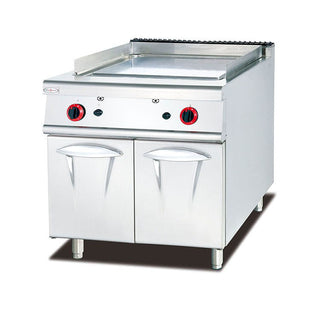
South Indian kitchens replace the tandoor with a wide flat griddle that stays hot all service. Dosa batter is spread thin and folded in front of the cook, so plate size and griddle width decide how many can be on the go at once. This gas griddle has a smooth steel plate rated at 9.6 kW and a storage cabinet below.
Idli and rice both come out of steam. A six-tray steaming cabinet handles 20 to 30 kg per load and cooks rice in about 45 minutes by the maker's figures, which suits a kitchen that sells rice with every plate. The batter itself is ground from soaked rice and lentils on a stone wet grinder, a machine specific enough to this cuisine that it is usually sourced to order.

A mixed menu is workable, but it is two kitchens sharing a pass. Budget for both sets of equipment and a longer canopy, and put the griddle and the tandoor far enough apart that the two cooks are not in each other's way. More steaming equipment sits in the steamers collection.
What has to happen in prep before the first order?
By the time the doors open, most of the menu has already been cooked, marinated or portioned. An Indian kitchen's prep list is long, and the equipment that shortens it pays back every morning.
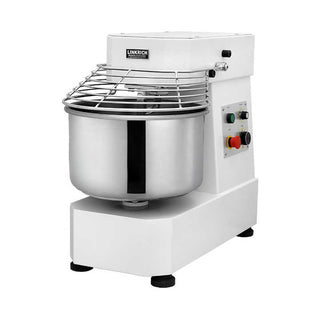
Dough comes first, because bread is on almost every table. Kneading naan dough for a full service by hand takes a cook out of the kitchen for a long stretch, and it varies from one batch to the next. A spiral mixer kneads a consistent batch while the cook does something else; this one works about 8 kg of dough at a time, with bowl sizes from 20 to 50 liters. If you are weighing a spiral against a planetary machine, our comparison of the two sets out which dough each handles.
Minced meat runs through a north Indian menu, from seekh kebab to keema. Grinding in house lets the kitchen set the fat ratio and the coarseness, and a 2,500 W commercial meat grinder rated at 500 kg an hour handles far more than a single restaurant needs, which means it is never the bottleneck. The meat grinder range has smaller units as well.
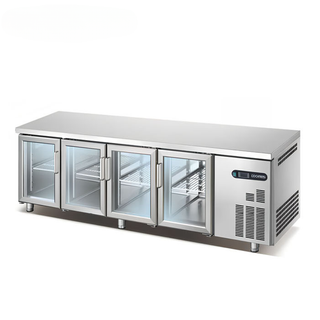
Marinades are the other big prep job. Tikka and tandoori chicken often sit in yogurt and spice overnight, which means trays of raw protein that need chilled space close to the tandoor. A refrigerated prep counter along the line does two jobs at once: cold storage underneath and a steel worktop on top for threading skewers. This one is 2,250 mm long with four doors.
Back-of-house storage for dairy and gravies usually needs a full-height cabinet as well; a double-door commercial refrigerator comes in sizes from 100 to 1,000 liters, and the prep tables collection covers other lengths of counter.
Can your extraction handle a tandoor and six burners?
Probably not, if it was designed for the previous tenant. A tandoor and a curry line of open burners together are among the heaviest heat and smoke loads a restaurant kitchen can carry, and extraction is the item most often underbuilt in Indian restaurant fit-outs.
The canopy has to cover the whole hot line and overhang the front where the cooks stand, with make-up air to replace what it pulls out. A wall-mounted canopy rated at 6,000 m³/h and 2 m wide covers a tandoor beside a range. Our guide to sizing a kitchen exhaust hood works through the airflow calculation with real appliance lists.
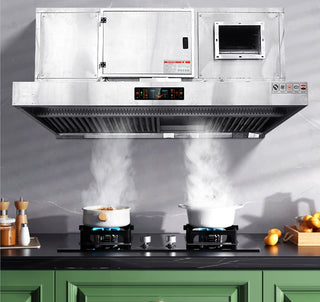
Plan the duct route before anything else is fixed, because moving extraction after the kitchen is tiled is the most expensive change in the fit-out. The full exhaust hoods and extraction range includes island canopies for a central cooking suite.
Warewashing for a table full of small dishes
An Indian meal comes back to the kitchen as a lot of small pieces. Every table returns curry bowls, bread baskets, chutney pots and rice dishes, far more items per cover than a plated Western menu, and turmeric-stained ceramic needs a hot wash to come clean.
A hood-type dishwasher suits most rooms of this kind. Racks slide in, the hood comes down, and a load of up to 16 dish sets is clean in one cycle, so the dish station keeps pace with the pass.
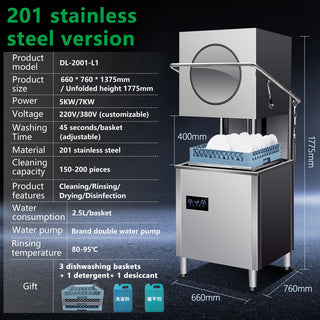
Put the dish station where dirty returns do not cross the tandoor cook's path, and give it enough landing space for a rush's worth of small bowls. Smaller rooms can start with an undercounter machine; our guide on how to choose a commercial dishwasher sets out where each type fits, and the hood and conveyor dishwasher collection has the larger units.
Where the equipment money goes
Indian kitchen spend concentrates in a few places, so buy those properly and economize elsewhere.
The tandoor and the extraction above it are the big-ticket pair. They are also the two items hardest to change later, which is the argument for buying the right size first. On a south Indian menu the griddle takes the tandoor's place in the budget, and on a mixed menu both are needed.
The bulk-cooking kit comes next. A jacketed kettle is a serious purchase, and a small room can start with heavy stockpots on the range and add the kettle once volume justifies the labor it saves. The range itself is not optional, and underbuying burners is a false economy on a curry line.
Refrigeration grows with the menu. A kitchen that marinates a lot and holds several gravies needs more chilled space than owners expect, and prep counters along the line earn their cost twice by adding worktop.
Prep machines sit in the middle. A dough mixer is close to essential once bread volume is real; a meat grinder depends on how much minced meat the menu uses. Serviceware is cheap per item but recurring, since bowls break steadily in a busy room.
Equipment is one line among several. Rent and the fit-out, including the ducting, usually add up to more, and vary far more by location. Each product card above carries its current price, and the hub guide on how to open a restaurant covers the budget structure that every format shares.
What licenses does an Indian restaurant need?
Everywhere, an Indian restaurant needs a registered business and a food-safety registration with an inspection, plus fire approval for the premises and an alcohol license if it serves drinks. The alcohol license is usually the slowest, so start it first. How that looks in four of the markets where Indian food is most in demand:
United Kingdom. Register as a food business with the local council at least 28 days before opening, and expect an inspection under the Food Hygiene Rating Scheme. A fire risk assessment is required for the premises. Selling alcohol needs a Premises Licence from the council plus a Personal Licence holder as Designated Premises Supervisor, qualified through the accredited Level 2 APLH award and a basic DBS check. Serving hot food between 11pm and 5am counts as late-night refreshment, which is covered under the Premises Licence.
United Arab Emirates. You need a trade license with a food-and-beverage activity and eligible zoning. Dubai Municipality inspects the premises, ventilation included. Civil Defence clearance is required, and every food handler carries a health card. Alcohol is tightly controlled: in Dubai it runs through Dubai Police and the Department of Economy and Tourism, in Abu Dhabi through the Department of Culture and Tourism, service is generally confined to hotels and specifically licensed venues, and minimum-distance rules apply around mosques and schools. Many standalone Indian restaurants in the UAE open without alcohol.
Australia. The local council gives premises approval and takes your food-business notification, and some states require a trained Food Safety Supervisor on staff. A fire safety statement covers the building. To serve alcohol you apply for an on-premises liquor license to the state or territory regulator, and everyone who serves it needs a current RSA (Responsible Service of Alcohol) card. In New South Wales, RSA now renews every two years.
United States. Register the business, obtain an EIN and a local business license, then a health department permit with inspection; food-handler or ServSafe certification is normally expected. A certificate of occupancy covers building and fire code. The liquor license comes from the state Alcohol Beverage Control board, often with county sign-off and federal TTB registration, and it is the slowest step by months. Some states cap licenses by quota, and a beer-and-wine license is a different, usually easier, application than full liquor.
This is an overview rather than legal advice. Requirements differ between councils and states, and they change, so confirm the current rules with the local authority before committing to a lease.
Lessons from Indian kitchens that opened too fast
The kitchens that struggle in their first months usually made their mistakes in the plan rather than on the line, and most of those mistakes trace back to the tandoor or to the prep behind the menu.
The most expensive is taking over a site whose extraction was sized for a cafe, and discovering after the lease is signed that a duct big enough for a tandoor cannot reach the roof. There may be no fix at all. A close second is the tandoor sized for average nights, which falls behind with bread every Friday.
Next comes the menu that is too long for the base gravies behind it. A list of forty curries sounds generous, but if they rest on four bases the kitchen is fine, and if they rest on fifteen separate preparations the morning shift never finishes. Owners who designed the menu before counting the bases tend to cut it within a few months.
Bread timing trips up kitchens that hire a skilled tandoor cook and then put the pass at the far end of the line. The cook cannot hear the call, bread goes out cold or arrives after the curry, and the dining room notices before the kitchen does.
Cold storage is the quiet one. Marinades and dough both want chilled space overnight, and a fridge sized for a plated menu is full by Wednesday. Trays end up balanced on trays, which an inspector will write up.
Finally, the license that started last. Owners who apply for an alcohol license once the kitchen is finished often open dry for weeks while paying full rent.
Planning a tandoor line, a dosa station or both? Tell us your menu style and how many covers you expect on the busiest night, and we will put together a kitchen specification built around the oven and the bulk-cooking kit.


