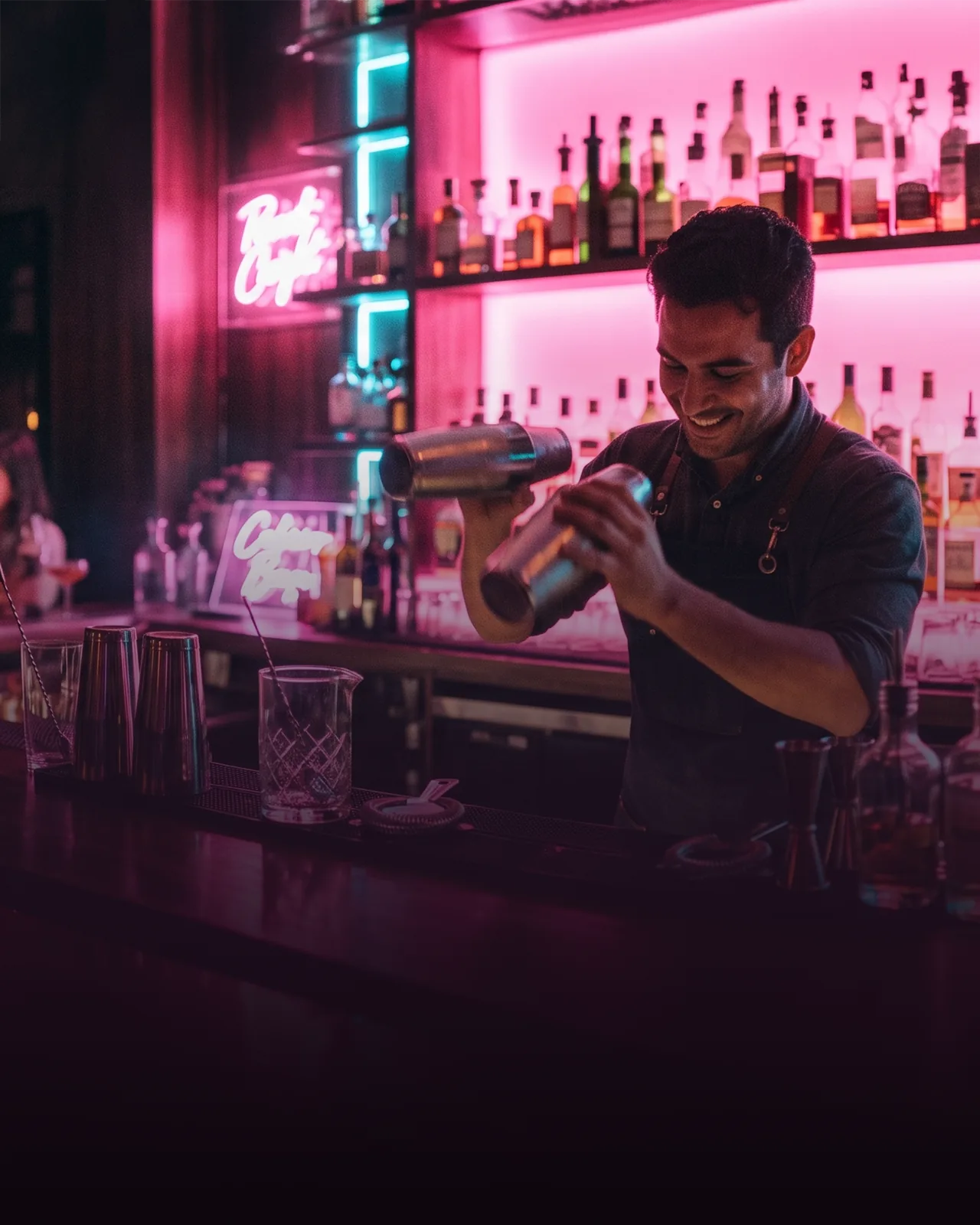


In short: the margin sits in yield, the share of each kilo of fruit you can sell as juice. Pressing to order or bottling ahead is the first choice in how to open a juice bar, because it sets both the kit and the food-safety rules.
A large glass of fresh orange juice is about 350 ml. Pressed at a 50% yield it takes 700 g of oranges; at 40% it takes 875 g. Same drink, same price on the board, and a quarter more fruit in the bin behind the counter. Multiply that by a few hundred glasses a week and the gap between those two numbers is most of a juice bar's margin.
That is why this guide treats the question of how to open a juice bar as a yield problem first and a design problem second. Everything else, from the menu to the fridge space, follows from two decisions: how much juice you get from each crate, and how long that juice is allowed to live before you have to pour it away.
Fresh to order, bottled, or both: which juice bar are you opening?
Every juice bar sits somewhere on one axis. At one end, every drink is pressed or blended in front of the customer and drunk within minutes. At the other, juice is pressed in batches and bottled, then sold chilled over the following days. Most successful sites end up doing both, but they start from one end and add the other.
| Fresh to order | Bottled | Both | |
|---|---|---|---|
| What sells | Juices and smoothies made while the customer waits | Chilled bottles and shots | Counter drinks plus a grab-and-go fridge |
| How long the juice lives | Minutes | Days, set by your own food-safety plan | Minutes at the counter, days in the fridge |
| Core machines | Citrus press, fast juicer, blender | Larger cold press, capping, labeling | All of the above |
| Cold storage | Produce fridge and ice | Large back fridge plus a display chiller | The most of any format |
| Labor pattern | Heavy at peak, idle between | Pressing sessions before or after trading | Two rhythms to staff |
| Food-safety load | Standard café rules | Labels and dates; extra juice rules in some markets | Both sets |
| Where it works | Gyms, stations, breakfast streets | Neighborhoods with repeat buyers, wholesale | High streets with steady all-day trade |
A fresh-to-order bar is cheaper to open and simpler to license, but it only earns while there is a queue. A bottled operation earns from the fridge while the counter is quiet and can sell to other shops, but it carries waste risk on every bottle that does not sell before its date. The combined format smooths the day out at the cost of the biggest refrigeration spend and the most complicated staff rota.
If you are unsure, open fresh to order with room reserved for a display chiller. Adding bottles later is straightforward. Unwinding a bottling setup that the neighborhood never bought into is expensive.
Why yield decides whether a juice bar makes money
Produce is the largest variable cost in a juice bar, and yield is the multiplier on it. Rent and wages are roughly fixed by the week; the fruit bill moves with every percentage point the press leaves in the pulp.
Yield depends on three separate things, and owners tend to blame the machine for all of them. The first is the fruit itself. Thin-skinned juicing oranges give far more than thick-skinned eating varieties, and the same variety juices differently between summer and winter. The second is the method. A citrus press, a centrifugal juicer and a cold press each leave a different amount of juice behind with the same carrot or apple. The third is the operator, because an overfed chute or a clogged screen costs juice on every batch.
The practical fix is to cost recipes by weight, not by count. "Four oranges" means nothing when the oranges change size every delivery. "700 g of oranges" gives you a real cost per glass and a number to check the press against. Run a weigh test on every new supplier and every seasonal change: weigh the produce in, weigh the juice out, write down the percentage. It takes ten minutes and tells you whether a cheaper crate is actually cheaper.
Trimming matters too. Ginger peel and pineapple skin count as waste before anything reaches the press, and so does bruised fruit. A prep cook who trims generously can cost as much yield as a poor machine, so prep standards belong on the same recipe card as the weights.
The press line, built from the menu backward
Read the menu and group every drink by what it needs. Citrus juices go to a citrus press. Root and green juices go to a cold press or a centrifugal juicer. Smoothies and bowls go to a blender. The size of each group at your busiest hour tells you which machine is the bottleneck, and our juicers range covers all three extraction types.
For most bars the citrus press carries the morning. An automatic press that takes whole oranges and pours continuously keeps a queue moving without anyone squeezing fruit by hand, and it gives a steady, measurable yield, which makes it the easiest machine to cost.
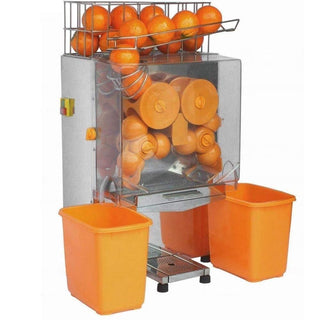
The cold press carries everything a citrus press cannot touch, from ginger shots and green juices to anything you intend to bottle. Because it squeezes slowly instead of shredding, it gets more juice from fibrous produce and puts less air into it, which is what lets a bottle keep its color in the fridge. The range below runs from counter units for bars pressing to order up to three-phase production machines for bottling runs.

How the three extraction types compare on throughput and cleaning time is covered in our separate guide to choosing a commercial juicer. For planning, two rules are enough. Never expect one machine to cover both citrus and greens, and keep the slow press away from the queue during the rush.
Smoothies are the other half of most juice menus and the easier half for margin, because frozen fruit is priced predictably and nothing is lost to pulp. A juice bar blender runs back to back through the rush, so motor power and noise both matter. A sound enclosure makes a real difference in a small shop where customers are talking at the counter.
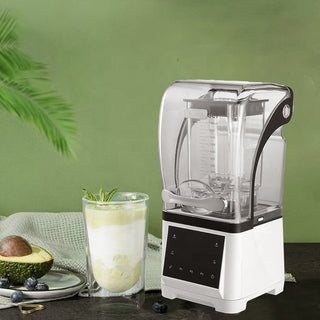
The full choice of jug sizes and motors is in our bar blenders collection.
How long does fresh juice last, and what does that change?
Raw, unpasteurized juice starts to change as soon as it leaves the press. Color darkens, flavor flattens, the juice separates, and microbes present on the fruit keep growing, slowly in the cold and quickly at room temperature. For a fresh-to-order bar that barely matters, because the glass is empty within fifteen minutes. For a bar selling bottles, shelf life becomes the central operating number.
There is no single shelf life for bottled raw juice. It depends on the produce, how clean the fruit and equipment are, how fast the juice is chilled and how cold it is held. Your food-safety plan has to set the date, and in practice raw cold-pressed juice is sold within a few days of pressing. Some brands extend that considerably with high-pressure processing, usually through a contract processor, which counts as a pathogen-reduction step and changes the labeling rules in some markets.
Short shelf life shapes the business in four ways:
- Batch size follows sales, not machine capacity. Press what you will sell before the date, and track every bottle that goes in the bin. A cold press that can fill three hundred bottles a session is only useful if three hundred bottles sell.
- Chilling speed is part of the recipe. Juice should go straight from the press into a cold fridge in closed bottles, not sit on the bench while the next batch runs.
- Every bottle needs a date and a label. Handwritten labels are fine to start; a consistent system is not optional.
- Capping has to be consistent. A cap that seals loosely lets air in and shortens life in a way you cannot see.
A benchtop capper removes the variation from the last point. The semi-automatic model below seals metal caps from 20 to 40 mm on bottles 100 to 300 mm tall at up to 20 a minute, which covers the pressing session of a single-site bottled operation.
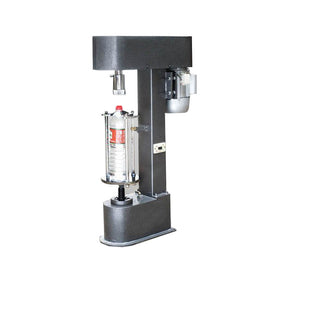
Cup sealers and larger capping lines sit in sealing and flow-pack machines, if bottles later become a wholesale line.
A juice bar runs on its cold chain
Refrigeration in a juice bar has three separate jobs, and buying one large fridge for all of them is a common way to fail an inspection or lose stock.
The first job is produce. Whole fruit and vegetables arrive several times a week and need space that is cold but not packed so tight that air cannot move. Greens and herbs want the coldest shelf. Citrus is more forgiving. Keep produce away from finished juice so that soil and outer skins never share a shelf with something ready to drink.
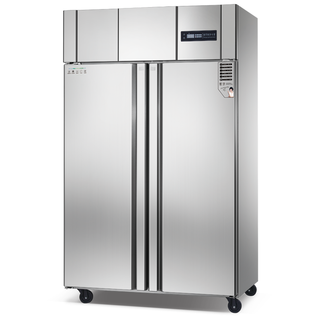
The second job is finished juice and prepped ingredients. A bottled operation needs a large back fridge held steadily cold, and a door that is opened a hundred times a morning will not hold temperature the way a storeroom fridge does. The double-door model below comes in sizes from 100 to 1000 liters, so the same unit type can scale with the bottling side.
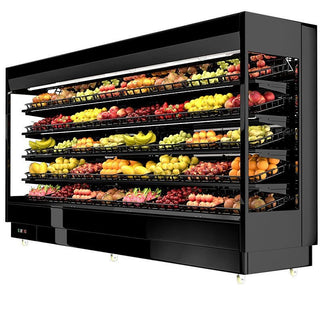
The third job is selling. Bottled juice and fruit cups sell on sight, and an open-front chiller puts them at eye level without a door between the customer and the product. The air-curtain multideck below has four shelves in a 90 cm footprint and suits a wall beside the till.
Frozen fruit for smoothies needs its own space. A 500-liter chest freezer holding at -18 °C or colder takes bulk frozen berries and banana, and the double lid on our 500L chest freezer lets you split smoothie fruit from anything else. Browse commercial refrigerators, display fridges and freezers to size each job, and our explainer on commercial refrigeration covers how the cabinet types differ.
Ice belongs in the cold chain too. Juices poured over ice and blended drinks use far more of it than owners expect, and running out at 11 a.m. stops half the menu. An undercounter machine is enough for a small bar; this one makes up to 85 lb a day and cleans itself on a cycle.
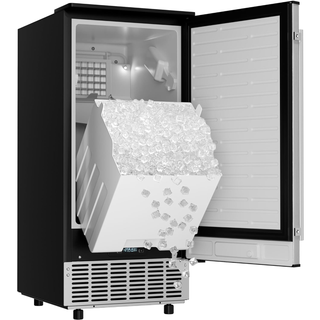
Larger sites should read our guide to choosing a commercial ice machine before settling on output, and compare the ice makers range.
Prep and cleaning set the real opening hours
Most of the labor in a juice bar happens before the first customer arrives. Produce has to be washed and trimmed, then weighed out; smoothie packs are bagged and ginger is peeled. A bar that opens at 7 a.m. often has someone in from 5:30, and that early shift costs the same whether the morning is busy or not.
Washing is the part planners skip. Whole produce needs a sink used only for produce, separate from the one for utensils and machine parts, and separate again from the hand-wash basin that inspectors look for first. A three-compartment sink handles the wash, rinse and sanitize sequence for juicer parts and jugs in one run.
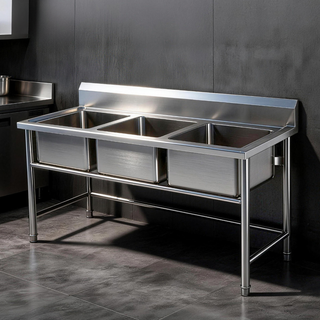
Cleaning is the other end of the day. Every press and blender jug has to be taken apart and sanitized at close, and fruit sugar left overnight in a press screen is a food-safety problem as well as a smell. Build that time into the rota rather than hoping it fits into the last half hour of trading. A separate wall-mount hand sink and a stainless prep table close to the press line complete the back of house.
Cups are a smaller item with a large running cost. A fresh-to-order bar goes through lidded cold cups at the same rate it sells drinks, and settling cup sizes early lets you align them with your recipe weights. The PET cups below come with matching lids from 7 to 32 oz and can carry a printed logo.
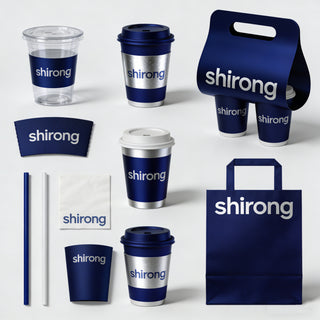
Branded options sit in custom cups.
What food-safety rules apply to unpasteurized juice?
A juice bar needs no alcohol license, which removes the slowest approval most hospitality venues face. What it does need is food-business registration or a permit, a food-safety plan that covers raw juice, and a passed inspection. Pressing to order is treated like any café. Bottling juice for sale later is where the extra rules start.
United Kingdom
Register with your local council as a food business at least 28 days before you open; registration is free. An Environmental Health Officer will inspect and give you a Food Hygiene Rating. Your food-safety management system, based on HACCP principles, has to cover how produce is washed and how quickly pressed juice is chilled. If you bottle juice on site before the customer orders it, it counts as prepacked for direct sale, and the label must show the name of the drink and a full ingredient list with allergens emphasized.
United States
Rules are set at state and county level, so expect a business license, a food service permit from the local health department, a pre-opening inspection and a certified food manager, such as ServSafe. At federal level, the FDA's Juice HACCP rule exempts retail juice bars that sell directly to consumers. The exemption has limits. Packaged juice that has not had a pathogen-reduction step must carry the FDA warning statement for untreated juice, and selling bottles wholesale to other shops generally brings you under the full Juice HACCP rule. Confirm both with your health department before you print labels.
Australia
Notify or register with your local council before you trade and meet the Australia New Zealand Food Standards Code. Businesses serving unpackaged ready-to-eat food generally need a certified Food Safety Supervisor and trained food handlers under Standard 3.2.2A. Some councils treat fresh juice made and bottled on site as a higher-risk activity, so ask your council's environmental health officer how they classify raw bottled juice before you plan a bottling line.
United Arab Emirates
In Dubai you need a trade license with a food and beverage activity from the Department of Economy and Tourism, plus approval from Dubai Municipality, whose inspectors check food handling and ventilation. Food handlers need health cards, and at least one person on site must hold the Person-in-Charge food-safety certification. Civil Defence clearance covers the premises.
Treat this as an overview, not legal advice, and confirm current requirements with your local authority. In all four markets, juice poured for immediate consumption is treated as ordinary café food. Once a bottle is filled for later sale, the label and the date on it become your responsibility.
Where juice bar margins leak
- Costing by count instead of weight. Recipes written as "four oranges" hide a yield swing you pay for with every delivery.
- Bottling before there is demand. A full fridge of juice with a three-day date turns into waste if the neighborhood buys counter drinks and walks past the bottles.
- One fridge for everything. Raw produce needs different conditions from finished juice, and mixing them costs shelf life or an inspection point.
- Pressing greens one glass at a time at 8 a.m. Green juice made in an early session and finished with fresh citrus at the counter serves faster and costs the same.
- Ignoring the power supply. Larger cold presses need three-phase power, which many small units lack. Find out before signing the lease, not after the machine arrives.
- Leaving cleaning to the last half hour. Strip-down time for presses and blenders is fixed. If it is not on the rota, it gets skipped.
Many juice bars add coffee within the first year, because a morning queue that buys orange juice also wants espresso. Our guide to opening a coffee shop that survives the morning rush covers the coffee station and the counter flow that both formats share.
Planning the press line and the fridge wall? Tell us whether you will press to order, bottle, or both, plus your busiest hour and your power supply, and we will put together an equipment list sized to your menu.


