

Brewery equipment for the production side: brewhouse, fermenters and bright tanks, the canning and labelling bench behind them, and the water, cold and extraction a brew day runs on. The taproom is a different list — that one is the craft beer bar.
A production brewery with no bar in front of it: mash to fermenter to bright tank, then the packaging bench that turns a batch into stock. A taproom is a different room with a different list, and it is the craft beer bar setup.
Quantities assume one brewhouse and four fermenters — the size a small brewery starts on. Tell us your target batch volume, how many turns a month you plan and whether you package into can, bottle or keg, and we size the fermentation, the glycol and the packaging against it before quoting.
Batch size, brew frequency and how much cold storage you end up needing are all set by this one vessel set. 304 stainless is the food-grade baseline rather than an upgrade.
Tank count sets how many beers can be on at once, because one fermenter is one line on the board. Four is the smallest number that lets a rotating list rotate.
Two jacketed bright tanks for conditioning and carbonation. Without them the brewhouse fills kegs but never a tap wall.
4 inlet and 4 outlet
Fermentation temperature is what makes the same recipe come out as the same beer twice, and two to four coils holds it across the tanks.
Crush gets set against the grain bill on the day, and buying malt pre-milled hands that decision to the supplier along with the yield.
150L
Without it, cleaning a vessel means a person inside it with a brush, and the beer tells on you a fortnight later.
Selling to trade at all means washing and filling kegs, and doing both on one machine keeps that from becoming the slowest job of the week.
Filling by hand caps a brewery at whatever one person can pour in a shift. A single-head piston filler is the first machine that decouples output from labour.
Industrial glycol for a tank farm past four fermenters and for the long-draw run to the bar.
GB-50
A three-vessel electric pilot alongside the main plant, for one-offs that would otherwise cost a full batch.
Fills and crowns bottles at bench pace, for the accounts that take glass while the seamer handles the cans.
Moves cans from the seamer to the labeller without a second pair of hands on packaging day.
Bottles rinsed immediately before filling — the step that decides shelf life.
Carbonation measured rather than guessed, so every batch pours the same.
A 50 L pilot system for trial batches and seasonals, so recipes are proved before a full brew day.
1000L
A jacketed kettle with agitator for adjuncts, syrups and anything cooked outside the brewhouse.
Canning is how a small brewery sells past its own taproom, and interchangeable bases mean one machine covers 330 and 440 ml rather than committing you to a format on day one.
Hand-applied labels sit crooked and it shows on a shelf next to national brands. A desktop applicator is the cheapest thing that makes a small brewery look distributed.
Best-before and batch code are a legal requirement on every unit that leaves the building, and a handheld coder does it without a line.
Shrink-wrapped multipacks — how cans leave for trade rather than one at a time.
Loose boxes shift on a pallet and arrive at the wholesaler damaged, which turns a delivery into a claim.
Batch and best-before coded on the can. Legally required and the first thing a distributor checks.
Automatic labeller for the sites that bottle for retail rather than for the taproom shelf.
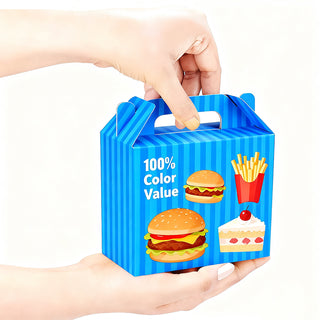
Printed boxes for seasonal and gift multipacks, where the carton is the only branding the buyer sees first.
Trade collections and direct sales leave through the same gate, and a printed tote is what a case walks out in.
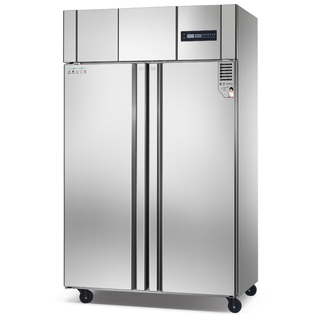
Yeast, hops and packaged stock all need cold that does not fluctuate. Fermentation is a schedule, and a warm store rewrites it.
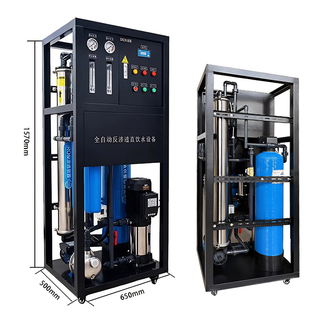
Brewing water gets built back up from stripped water, so a recipe actually starts at this membrane rather than at the mash tun.
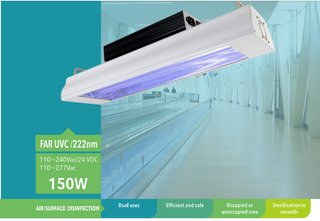
Airborne wild yeast is the one contaminant a brewery cannot wash off a surface. Treating the cellar air is what protects an open transfer.
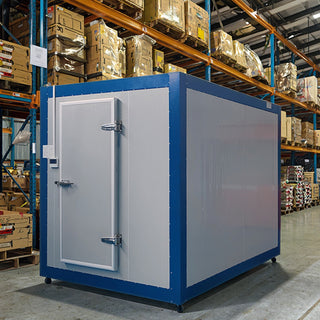
Kegs, hops and yeast outgrow a reach-in on the first brew day, and a modular room is the only cold that scales with the tank count.
40 ton
Malt sacks, can trays and shrink wrap arrive by the pallet and leave as a mountain. A baler makes that collectable instead of stored.
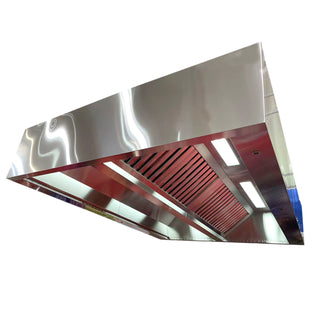
Hangs over the kettle: a boil throws steam and hop volatiles for an hour, and all of it has to leave the room.
Treats water after the RO membrane, so the liquor going into the mash tun starts sterile.
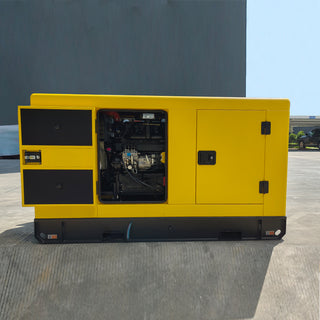
A fermenter that loses glycol for a day loses the batch, which makes a standby set cheaper than the insurance excess.
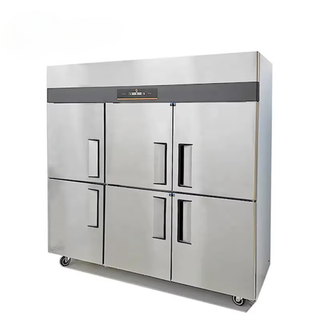
Hops and yeast spoil quietly, with no smell and no colour change to warn you, and both hold only while they stay frozen.
Laser floor marking for forklift and pedestrian lanes on a wet plant floor.
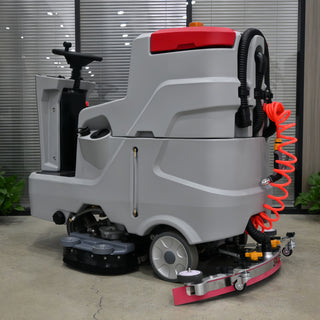
A tank hall floor is wet and sticky by the end of a brew day, and a mop does not keep up with that many square metres.
Undercounter cold in the lab corner for samples and yeast slants.
Spent grain shredded before it leaves — it goes out by the tonne every brew day.
100
Far-UVC over the packaging line, where an open can is exposed to room air.
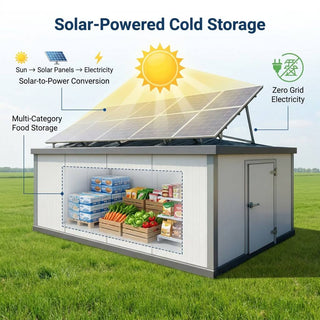
A second cold room for finished pallets, running off its own solar rather than the plant supply.
Catalog prices at the quantities listed, excluding shipping, duties and installation. Send a request and we confirm current pricing and lead times for your build.
Request received
We are pricing the setup now and will come back with a quote and lead times, usually within one business day.
That did not go through
Something broke on the way to us. Try again, or write to sales@barequip.pro and we will pick it up from there.