
Most of a Thai menu is decided before lunch. How to open a Thai restaurant starts with the prep behind it. Curry paste is made daily, the two rices run on separate schedules, and every salad and sauce is cut or tasted close to service.
At half past nine, a cook toasts coriander seed in a dry pan while someone else peels galangal and slices lemongrass into thin rings. By eleven there is a tub of red curry paste on the pass that you can smell from the dining room door. By seven that evening it will have gone into forty curries, and every one of them will taste of that morning's work.
That rhythm is the thing to design around if you are working out how to open a Thai restaurant. The cooking itself is fast, often under five minutes a plate. The work that makes it possible happens hours earlier, and a kitchen that gets the morning right can cook a long menu from a short line. One that treats prep as an afterthought ends up with a big line that is always waiting.
The wider restaurant build, from the cold room to the dining room, is covered in our guide to opening a restaurant. This one is about the prep kitchen a Thai menu needs behind it.
The morning list a Thai kitchen cooks from
A Thai kitchen opens each day with a prep list rather than a mise en place tray, and it is longer than most cuisines of the same size. A typical mid-size menu needs these ready before the first order:
- Two to four curry pastes, or the bases made from them, fried in coconut cream and held cold.
- Jasmine rice cooked in batches through the day, and sticky rice soaked since the night before.
- Green papaya and long beans shredded or cut for salads, with herbs picked and kept damp.
- Dressings and dipping sauces, from nam jim jaew to the lime and fish-sauce base for larb.
- Stocks for soups and noodle dishes.
- Proteins sliced, marinated or skewered for the grill.
Each line on that list has its own equipment and its own shelf life, which is why the prep kitchen in a Thai restaurant often takes as much floor space as the hot line. Plan the two together from the first sketch, and put the prep benches between cold storage and the pass so nothing crosses the kitchen twice.
Should a Thai restaurant make its own curry paste?
For the curries that carry your name, yes. Freshly made paste has an aroma that a jar or a pouch loses within weeks, and guests who know Thai food notice the difference in the first spoonful. For secondary curries on a long menu, or for a street-style kitchen with no prep room, a good commercial paste bought in and finished on site is a reasonable trade.
The ingredients explain why paste takes time. A red curry paste combines soaked dried chilies with lemongrass, galangal, makrut lime zest and coriander root, plus shallot, garlic, toasted spices and shrimp paste. Green curry paste swaps in fresh green chilies. Every one of those has to be peeled and sliced before it is ground smooth enough to fry evenly.
Small restaurants still pound by hand in a stone mortar, which gives the best texture and takes about an hour for a day's batch. Once volume passes that, a bowl cutter does the grinding. This 32-liter model runs its blades at 1,400 rpm on an 1,800 W motor, which breaks down fibrous lemongrass and galangal in minutes. It also chops meat for larb and fish for tod man pla, so it earns its space on more than one prep task.

Paste is then fried in split coconut cream until the oil separates and the raw smell goes. Kitchens making curry bases for a large dining room or several sites do this in a jacketed pan, and a tilting kettle with an agitator stirs the batch so thick paste does not catch on the bottom. For a single restaurant, a heavy pot on a strong burner does the same job in smaller amounts. The food processor range covers smaller grinders too.
Making paste in volume without losing the aroma
Paste starts losing its top notes the day it is made, so the aim is to make it often and store it airtight. Most kitchens that grind their own settle on a daily or every-second-day batch for the main curries, portioned into service-sized packs as soon as it cools.
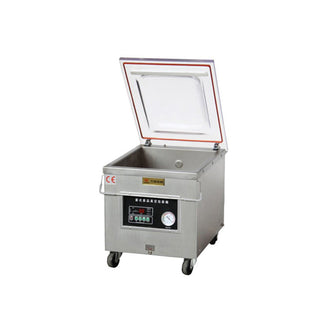
Vacuum packing keeps the air off the paste, which slows both the loss of aroma and the browning of fresh herbs. A tabletop chamber sealer with a 350 mm bar handles service portions quickly, and packs stack flat in a drawer fridge at the line. Our guide to vacuum packaging for kitchens covers bags and seal settings.
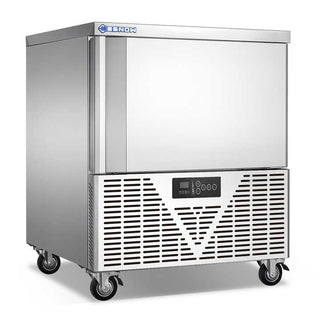
Anything cooked ahead, from fried curry bases to stocks, has to cool fast before it goes into storage. A blast chiller takes food from 75 °C to 3 °C in about 90 minutes on this model, and the same cabinet can freeze backup paste to −18 °C so a busy weekend never runs dry. The trade-offs between a blast unit and an ordinary freezer are in our explainer on blast freezers and commercial freezers.
Jasmine rice and sticky rice run on separate clocks
Rice is on almost every table, and the two main kinds run to different timetables. Jasmine rice is cooked in batches and held hot for a couple of hours. Sticky rice for Isaan dishes is soaked for several hours, often overnight, then steamed in baskets or trays and kept warm and covered.
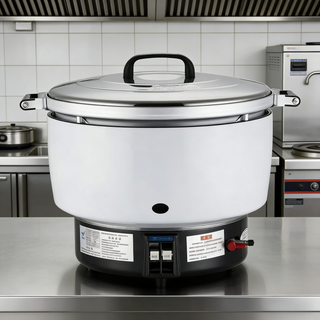
For jasmine rice, a commercial gas rice cooker cooks evenly and frees the burners on the line. Stagger batches so a fresh pot is ready as the last one runs low, rather than cooking the whole day's rice at eleven and holding it until nine. Size the cooker to your busiest hour, with enough capacity to cover two sittings if the first batch runs late.
Sticky rice needs steam rather than a pot. A six-tray steaming cabinet takes 20 to 30 kg per load, and between rice batches the same cabinet steams fish or custards. The steamer range includes smaller countertop models for a kitchen that sells less.

Leftover rice is a food-safety question as well as an ingredient for fried rice. Cooked rice that cools slowly on the bench can support bacteria whose spores survive cooking, so rice meant for tomorrow's khao pad is spread thin and chilled fast, ideally in the blast chiller, then stored cold and used within the day.
Why do cold salads need the most prep space?
Because they are almost all knife work, and the knife work has to be done close to service. Som tam, larb and the herb plates served with grilled meat go out raw or barely cooked, so their ingredients cannot be prepared a day ahead the way a curry base can.
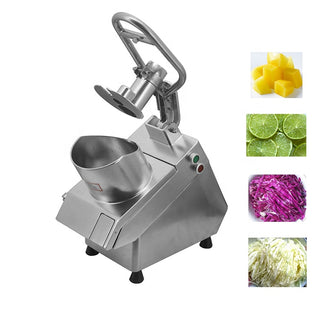
Green papaya is the biggest single job. A busy som tam station can go through several kilos of shredded papaya a night, and hand-shredding it takes a cook out of the kitchen for much of the afternoon. A benchtop vegetable cutter with a 3 mm shredding disc produces fine, even strands at up to 300 kg an hour, and the same machine slices cucumber and dices shallots. Heavier volumes suit a larger floor-standing vegetable cutter rated from 300 to 800 kg an hour.
Shredded papaya goes limp and watery if it sits too long, so cut it in two or three batches across the day and hold it cold. The pounding itself stays at the station. Som tam is bruised to order in a clay mortar with lime and chilies, and that mortar is the one piece of equipment in the salad section that no machine replaces.
The salad cook needs everything within reach at 2 to 8 °C. A countertop refrigerated rail holds herbs, dressings and cut vegetables in pans right at the board, so the cook builds a salad without opening a door.
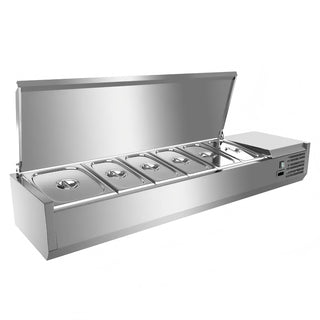
Keep raw mince for larb in its own pan at the bottom of the fridge, away from herbs that will be served uncooked.
How to open a Thai restaurant for street, casual or upscale service
The format decides how much of the prep list is made in-house and how much space it gets. Here is how the three common models compare.
| Street style | Casual dining | Upscale | |
|---|---|---|---|
| Menu | 10 to 15 dishes, mostly from the wok and grill | 30 to 50 dishes, with curries and salads alongside the wok | Shorter set or tasting menus with regional dishes and seasonal changes |
| Curry paste | Bought in, finished on site | Main curries made in-house, others bought in | All pastes and most sauces made daily |
| Rice | One cooker, jasmine only | Jasmine in staggered batches plus a sticky-rice steamer | Several rice types, cooked closer to service |
| Cold station | A shared prep fridge | A dedicated salad cook with a refrigerated rail | A cold section with its own chef and plating space |
| Hot line | One or two wok burners and a fryer | Two wok burners plus fryer, grill and soup kettle | Smaller line, more pots and steam; plating takes the time |
| Prep staff | The cooks prep before opening | One or two prep cooks each morning | A full prep brigade, often starting hours before service |
Budget follows the same line. A street-style kitchen spends most of its equipment money on the hot line and one good upright fridge. Casual dining moves money into prep machines and cold holding. An upscale kitchen spends less on raw output and more on fast cooling and the staff hours behind it.
A short hot line for a long menu
When the prep is done properly, the hot line in a Thai restaurant can be surprisingly short. Curries are finished from ready bases in a few minutes. Stir-fries such as pad kra pao and pad thai go through the wok. Soups and noodle broths come from a kettle that has been simmering since the morning.
The wok station is still the loudest part of the kitchen, but a Thai menu leans on it less than a Cantonese one does. A high-pressure gas wok range covers that work, and the canopy above it needs sizing to the burners, as our guide on how to size a kitchen exhaust hood explains. The stoves range lists the alternatives. If the wok line is the center of your menu, our guide to opening a Chinese restaurant goes deeper on it.
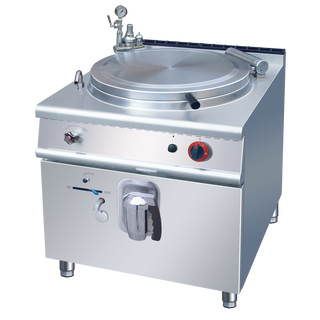
Broth is a quieter station that runs all day. Tom yum stock and boat-noodle broth need a large volume held at a steady simmer, and a 100-liter gas kettle with a double jacket does that without scorching the base or tying up a burner.
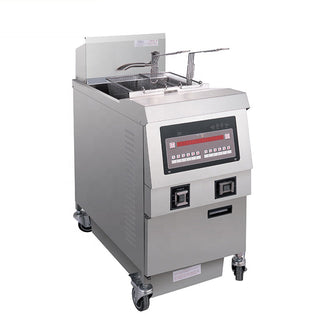
Frying gets its own station. Fish cakes and spring rolls would foul the wok oil and drop its temperature, so they go into a fryer. Twin 25-liter tanks let you keep one for seafood and one for everything else.
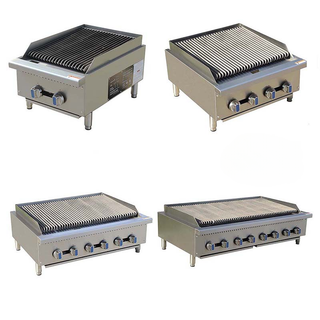
Grilled dishes, from gai yang to moo ping skewers and satay, are traditionally cooked over charcoal. Where a landlord or local rules do not allow a charcoal grill indoors, a gas charbroiler with strong radiant heat gives the char. This eight-burner countertop unit is rated at 46.9 kW, and our guide on how to choose a commercial grill compares it with other types.
Tasting for balance before every service
Thai cooking is built on balance between flavors, and the balance drifts every day. Limes vary in sourness from one delivery to the next. Chilies from a new crop can be twice as hot as last week's. Palm sugar changes from block to block. A dressing mixed to the same recipe on Monday and Thursday will not taste the same.
So the senior cook tastes every dressing and paste during morning prep and adjusts it before it goes into the rail. This is a kitchen routine rather than an equipment decision, but it shapes the layout. Tasting needs a clear bench near the prep fridges and a written reference for how each sauce should taste, so a new cook can check against something other than memory.
Heat level is the other daily decision. Most restaurants outside Thailand cook to a mild or medium default and let guests ask for more, which means chili is added at the station rather than built into every paste. A small tray of fresh chilies and chili vinegar next to the wok and the salad station handles that.
Allergens travel through the whole menu. Peanuts and fish sauce appear in more dishes than guests expect, so the recipe cards used for tasting are also the ones front-of-house staff use to answer questions.
Cold storage when half the menu is fresh herbs
Thai cold storage holds loads that do not belong together. Soft herbs wilt within days, cooked bases sit in sealed packs, and raw proteins need the coldest shelf. Mixing them in one reach-in makes each of them worse.
Under the line, drawer fridges keep portioned proteins and paste packs in GN pans at 0 to 5 °C, and each drawer opens without letting the whole cabinet warm up. This model holds four full-size GN pans at 350 liters net and is rated for kitchens at 32 °C ambient, which matters next to a wok range.

Behind it, an upright double-door commercial refrigerator, available from 100 to 1,000 liters, takes coconut milk, herbs in boxes and the next day's deliveries. Keep herbs in covered, damp containers on the upper shelves, away from the fan outlet that dries them out. Our explainer on commercial refrigeration covers the different types, and the refrigerator range and undercounter units show what fits your space.
Warewashing closes the loop. A Thai table uses a lot of small bowls and sauce dishes, and a hood-type dishwasher turns them around fast enough for a full dining room. Our guide on choosing a commercial dishwasher helps with sizing.
Which approvals does a Thai restaurant need?
In every market a Thai restaurant needs a registered business and food-safety registration with an inspection. Premises and fire approval come next, plus an alcohol license if it serves drinks. The details differ in these four markets.
Thailand. A Food Establishment Licence comes from the local authority; premises over 200 m² need the full license, while smaller ones notify the authority instead. Selling alcohol needs a separate license from the Excise Department, and sales hours are restricted and have been changing recently, so confirm the current times with the Excise Department. The Foreign Business Act limits foreign ownership of a restaurant business, so foreign owners usually take legal advice on how to structure the company before registering.
Australia. Register or notify your food business with the local council, which also approves the premises and fit-out, and file a fire safety statement. Several states require a trained Food Safety Supervisor on staff. To serve alcohol you apply to the state or territory liquor regulator for an on-premises license, and everyone who serves it needs a current RSA competency card.
United Kingdom. Register with the local council as a food business at least 28 days before opening. You will be inspected under the Food Hygiene Rating Scheme, need a written food safety management system based on HACCP, and must complete a fire risk assessment. Selling alcohol requires a Premises Licence from the council and a Designated Premises Supervisor who holds a Personal Licence.
United Arab Emirates. In Dubai, you need a trade license that covers food and beverage activity, in a location zoned for it. Dubai Municipality inspects the premises and food handling, Civil Defence clears fire safety, and every food handler needs a health card. Alcohol is tightly controlled. It is licensed through Dubai Police and the Department of Economy and Tourism, is mostly limited to hotels and licensed venues, and carries distance rules from mosques and schools, so many standalone restaurants open without alcohol.
None of this is legal advice. Check the current rules with your local council, regulator or licensing office before you sign a lease or order equipment, because food-business registration and inspection often have to happen before you can open.
Where Thai mise en place breaks down
- Grinding a week of paste on Monday. It saves labor and costs aroma. By Friday the curries taste flat. Make the main pastes daily or every second day, and freeze only a backup batch.
- Cooling rice on the bench. Rice for fried rice has to be spread thin and chilled fast. A tray left on the side until the end of service is a food-safety risk.
- Shredding all the papaya at eleven. By dinner it has gone soft and wet, and the som tam loses its crunch. Cut in smaller batches through the day.
- One reach-in for everything. Herbs and raw meat need different conditions and should be kept apart. Split storage between drawer fridges on the line and an upright behind it.
- Buying the hot line first. A big wok range with no bowl cutter, no vacuum sealer and no cold rail leaves the cooks waiting on prep. Budget the prep kitchen before adding burners.
- No tasting routine. Limes and chilies change with every delivery. A menu that is not tasted each morning drifts, and regulars notice first.
Planning a Thai kitchen and not sure how much prep space it needs? Send us your menu and your seat count, and we will size the prep and cold stations along with the hot line.


