
Food brings in about as much as the bar in a gastropub, which makes how to open a gastropub mostly a kitchen question. Where the extraction duct can leave an old building sets the menu, and covers per day size the line and the cold chain.
The building is usually older than anyone working in it. A corner pub from the 1880s, flats on the two floors above, a frontage the council protects, and a cellar that was designed for barrels rather than for walk-in fridges. The new chef wants a charcoal grill. Whether that grill happens depends far less on the chef than on one question nobody asked at the viewing: where can a duct go?
That is the real starting point for anyone working out how to open a gastropub. A straight pub can live with a microwave and a toastie machine. A gastropub, where plates bring in roughly as much as pints, runs a restaurant kitchen inside a building that was never meant to have one, and the kitchen tends to grow until it runs into the walls.
Where can the extraction duct go in an old pub?
Up through the building, up the outside of it, or nowhere. Those are the three answers, and each one rewrites the menu before a single dish is costed.
Up through the building means a riser through the floors above to a discharge point clear of the roof. In a pub with flats over it, that duct passes through somebody else's home, so it needs the freeholder's consent, fire-rated boxing on every floor and access for cleaning. When it exists already, perhaps from a previous kitchen, it is the most valuable thing in the lease.
Up the outside is the common fix, with a flue fixed to the rear wall and taken above the eaves. It is cheaper than a riser and far more visible, which is where planning comes in. On a listed building or in a conservation area, a steel flue on the back elevation is exactly the kind of change the council looks at closely, and odor and fan noise reaching the neighbors are the usual conditions attached to any approval.
Nowhere means recirculation. A ventless unit pulls the air through four filter stages, from a grease baffle to activated carbon, then returns it to the kitchen. It is a real option for fryers and ovens, rated by the manufacturer for light to medium duty, and it lets a kitchen open in a basement or behind a listed façade where no duct route exists.
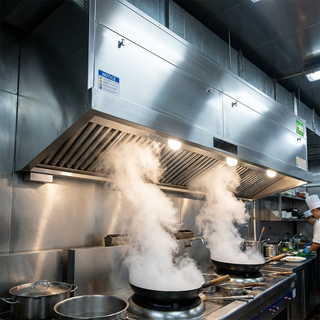
What recirculation will not do is carry solid fuel, and in many jurisdictions it is not accepted over a charbroiler either. So the chef's charcoal grill is a question about the duct, and the answer is decided before the menu is written. Our guide to sizing a kitchen exhaust hood covers airflow and make-up air in detail. This section is only about the route.
When there is a route out, the canopy itself is the easier purchase. A wall-mounted hood rated at 6,000 m³/h covers a two-meter line, and the one we stock comes in 201 stainless by default with 304 available, which is worth specifying over a fryer that runs all day.
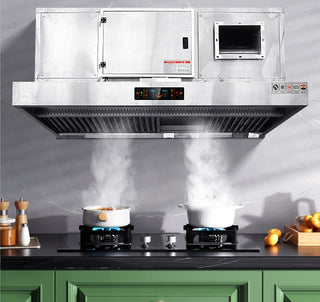
For a shorter line, or a bar-side pizza oven that sits away from the main kitchen, a ductless electrostatic unit at 3,000 m³/h with a carbon stage is the middle ground. The full range, ducted and ventless, is in kitchen ventilation.
Writing a menu the building can cook
Once the duct route is known, the menu follows it. A gastropub with a proper flue can cook anything a restaurant can; one on recirculation cooks with steam and hot oil, and can still do it well.
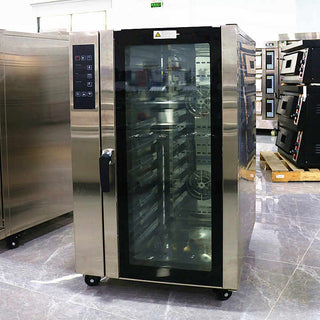
The single appliance that most helps an old kitchen is a combi oven. It roasts the Sunday joints, steams the vegetables, holds the pies and bakes the bread, which means fewer separate machines under the canopy and a shorter, cheaper hood. The eight-tray model in our range is gas-fired and runs from 0 to 350 °C; our comparison of combi and convection ovens explains when the steam function earns its place.
Fish and chips remain the dish most pubs sell more of than they planned. A twin-tank fryer keeps chips out of the batter oil, and the double model we carry holds 25 liters per tank, in gas or electric.
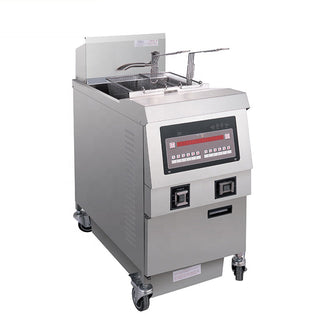
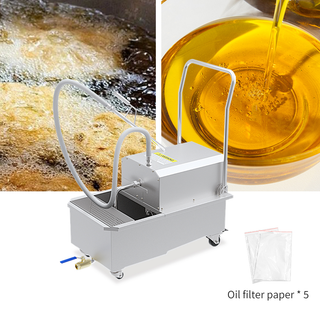
Oil is a running cost that grows with covers, and it is also a smell. A filtration cart that vacuums and reclaims the oil at the end of service extends its life and keeps the kitchen air cleaner, which matters more when the extraction is recirculating.
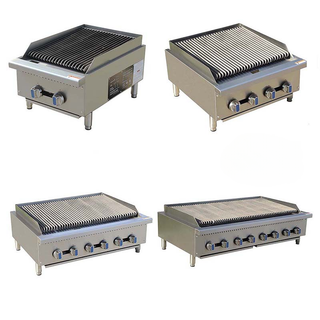
Steak is where the duct shows. With a flue, a gas charbroiler is the classic pub grill; the countertop unit in our range runs eight burners at up to 46.9 kW on natural gas or LPG. That heat all has to leave the building, and it is the appliance a recirculating hood is least likely to be approved over.
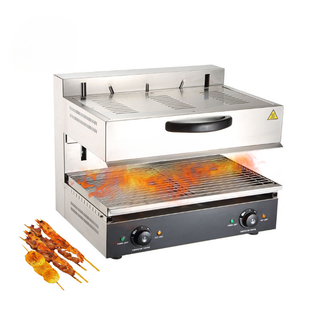
Without a flue, an electric salamander does the finishing work: gratins, melting cheese on the burger, browning a crumble. It draws 4,000 W and sits on a wall bracket above the pass. For the rest of the hot line, compare options in ranges and griddles and grills, and our guide to choosing a commercial grill covers the trade-offs by fuel.
Gas or electric in an old building
Old pubs often have a modest electrical supply sized for lights, a cellar cooler and a glasswasher. A kitchen changes that. An electric six-plate range with an oven, for example, draws 28.8 kW on three-phase, and a hood dishwasher adds 9 kW more. Ask the electrician for the supply rating before you choose between gas and electric, because upgrading the incoming supply can take longer than the fit-out itself.
Gas brings its own conditions. Interlocks between the gas supply and the extraction fan are standard in commercial kitchens, so the burners cannot run with the fan off. Budget the interlock with the hood rather than discovering it at the gas engineer's sign-off.
How big a kitchen for how many covers a day?
Size it by the busiest day's covers, split into its two peaks. A gastropub serving 150 covers on a Saturday does not cook 150 plates evenly; it cooks perhaps 50 at lunch and 100 between seven and nine, and the line has to clear that evening peak without the pass backing up.
| Around 60 covers a day | Around 150 covers a day | Around 300 covers a day | |
|---|---|---|---|
| Typical format | Short menu, lunch and dinner, bar snacks between | Full menu, Sunday roasts, garden in summer | Destination food pub, two sittings, private dining |
| Kitchen team per shift | One chef and a porter | Two or three chefs and a porter | Head chef, three or four on the line, two porters |
| Hot line | Combi oven, twin fryer, four burners, salamander | Combi, twin fryer, six burners, grill or griddle | Two combis, fryer bank, charbroiler, full range |
| Extraction | Recirculating can work if the menu avoids the grill | Ducted canopy over the full line | Ducted, with make-up air and a separate pastry area |
| Cold storage | Two uprights and a prep counter | Uprights, a refrigerated prep table, freezer | Walk-in cold room plus line refrigeration |
| Warewashing | One hood dishwasher, one bar glasswasher | Hood dishwasher, glasswasher, pot sink | Larger dishwasher or a second machine, glasswasher |
| Bar | Four to six draft lines | Six to eight lines, a nitro tap | Ten or more, a tap wall with rinsers |
The row that surprises people is the kitchen team. At 150 covers a day, the kitchen payroll typically overtakes the bar payroll, and it stays that way. That is what a kitchen outgrowing the bar looks like in practice. Money and staff tilt toward food, while the bar still has to feel like a pub.
The cold chain a pub never needed
A wet-led pub keeps beer cold in the cellar and wine in a back-bar fridge. A food-led one needs a separate chain for raw proteins and dairy, kept well away from anything the bar touches.
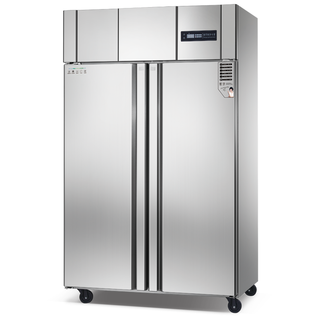
Start with upright capacity in the kitchen. A double-door commercial refrigerator is available in our range from 100 to 1,000 liters, in chilling or freezing modes, and most 60-cover kitchens start with two of them: one for raw, one for prepared.
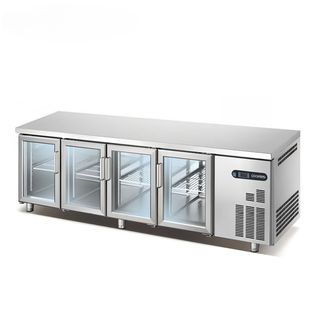
Then refrigeration at the point of assembly. A four-door prep table 2,250 mm long gives the line a stainless worktop with chilled storage under it, so the chef on starters and salads does not walk to the upright for every plate.
At 300 covers, uprights stop being enough, and the cellar is the tempting place for a walk-in. That can work if the cellar is dry and has an extract route for the condensing unit. Our guide to cold rooms and walk-ins covers when one pays off, and the reach-in and undercounter range fills the line.
Keeping the bar a pub when food drives the money
The bar is what makes a gastropub a pub rather than a restaurant with a beer tap. It trades the long afternoons between lunch and dinner, it carries the guests waiting for a table, and draft beer still earns a better margin per minute of staff time than most plates.
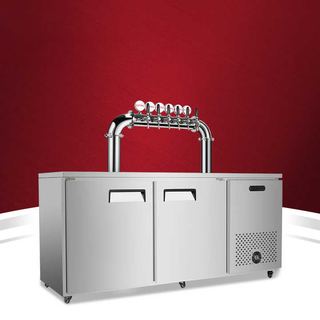
Most gastropubs run a tight list of two local ales and a lager, with a stout and a seasonal guest beside them. An air-cooled kegerator in 4, 6 or 8-tap builds holds the kegs at 3 to 7 °C under the counter and covers that list without a separate cellar cooling system.
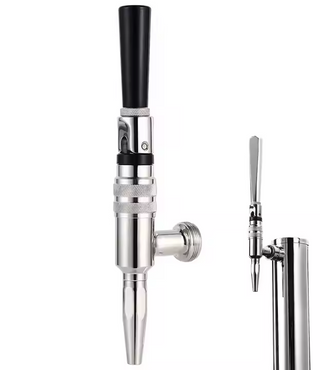
A stout on nitro is the tap that makes the bar look serious. The faucet uses a restrictor disc for the cascading pour and needs beer gas, a 70/30 nitrogen and CO2 mix, at 30 to 40 psi through its own regulator. Plan the gas line when the tower goes in.
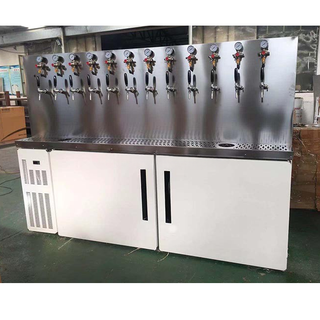
A busier pub with a longer list can move the kegs out of sight entirely. The 12-tap cooler in our range puts the taps on a rear tap wall with concealed lines and two built-in rinsers, and holds the kegs at 2 to 5 °C in a 600-liter cabinet on casters.
Our guide to setting up draft beer covers gas and line balancing, and what a cheap kegerator costs is worth reading before choosing on price. Towers and faucets are in beer towers and draft beer parts.
One thing ties the two halves together, and it is the till. A gastropub sells at the bar and at the table in the same hour, so the POS system has to send food tickets to the kitchen and drinks to the bar from one order, and handle a tab that started with a pint and ended with dessert.
Plates and pint glasses need separate machines
Every food-led pub ends up with two washing stations, and trying to share one is a false saving. Plates come back greasy and in volume at the end of each sitting; glasses come back steadily all day and need to be spotless and cool enough to pour into.
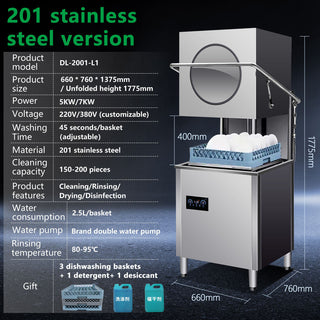
For the kitchen, a hood-type dishwasher handles the evening peak. Ours washes 16 place settings per cycle and draws 9 kW, which belongs on the electrical survey above.
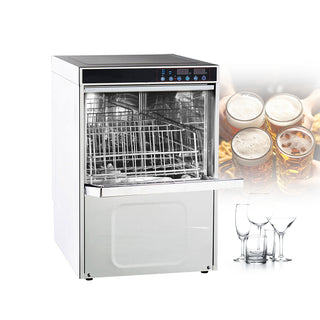
Behind the bar, a front-loading glasswasher runs 30 baskets an hour with an 85 °C rinse and uses 3 liters per cycle. Beer glasses washed with food grease lose their head, and a dedicated machine avoids that problem entirely.
Our guide to choosing a commercial dishwasher goes through rack sizes and throughput. Machines are in dishwashers and glasswashers.
Which licenses does a gastropub need?
A gastropub is licensed as a pub that also runs a food business, so it needs both approvals, and in an old building the kitchen adds a planning question of its own. The detail differs by market.
United Kingdom
The alcohol side is a Premises Licence from the local council, with a Personal Licence holder named as Designated Premises Supervisor; the personal license requires the accredited Level 2 APLH award and a basic DBS check. Hot food served after 11pm counts as late-night refreshment and goes into the same operating schedule. The food business must be registered with the council at least 28 days before opening, and an environmental health officer will inspect and award a Food Hygiene Rating. A fire risk assessment is required for the premises, and TheMusicLicence from PPL PRS covers background music.
The kitchen adds planning. In England a pub, including one with expanded food provision, is its own planning use class (sui generis), so changing between a pub and a restaurant needs permission. A new external flue normally needs planning permission, and on a listed building it also needs listed building consent, with odor control and fan noise typically set as conditions. Talk to the planning officer before signing the lease if the kitchen has no existing extraction route.
Australia
Liquor licensing sits with the state or territory regulator, and the license type depends on what the venue mainly is. A traditional pub trades under a hotel license in New South Wales, while a venue whose primary purpose is serving meals can hold an on-premises license, which is worth discussing with the regulator early for a food-led format. Every person serving alcohol needs a current RSA card, and in NSW the competency card is valid for five years before a refresher is needed. On the food side, notify the council as a food business; NSW and some other states also require a trained Food Safety Supervisor. Premises approval and a fire safety statement cover the building, and OneMusic Australia licenses recorded music.
United States
The liquor license comes from the state Alcohol Beverage Control board, often with county or city approval, and it is the slowest step; in quota states a full license may have to be bought from an existing holder. Several states offer restaurant license classes tied to a minimum share of food sales, which a gastropub can often meet. Add federal TTB registration, a business license and EIN, a health department permit with food-handler or ServSafe certification, and a certificate of occupancy. The fire marshal will inspect the hood and its suppression system, and music needs ASCAP, BMI and SESAC licenses.
This is an overview rather than legal advice. Confirm current requirements with your local licensing authority and environmental health team, and start the alcohol license, the food registration and any planning for the flue at the same time, because any one of them can hold up opening day.
Where gastropubs lose their first year
- Signing the lease before surveying the duct route. A pub with no way to extract a grill cannot sell steak, whatever the business plan says. Get a ventilation engineer to the viewing, not to the fit-out.
- Writing the menu before the building. A fifty-dish menu on a four-burner line with a recirculating hood produces long ticket times and waste. Twelve dishes cooked well on the kit you can install beat forty compromised ones.
- Ignoring the electrical supply. An electric kitchen and a hood dishwasher can double a pub's load. Supply upgrades have long lead times, so check the incoming capacity first.
- Letting the kitchen take the bar's space. Food drives the money, but a bar squeezed into a corner loses the drinkers who fill Tuesday afternoons and wait for tables on Saturdays.
- One washing machine for everything. Glasses washed with plates come out greasy and pour flat pints. Budget a separate glasswasher from day one.
- Treating the neighbors as an afterthought. Odor and fan noise from the flue are the most common complaints about pub kitchens, and a council can attach conditions or review them later. Specify odor control and a quiet fan at the start.
Opening a pub where the bar still leads? Our guide to opening a pub covers the drinks-first version, and how to open a restaurant goes deeper on the kitchen, zone by zone.
Found the pub and still working out the kitchen? Send us the floor plan, the covers you expect on a Saturday and where extraction can go, and we will put together a line, a cold chain and a bar that fit the building.


