

Fish starts losing quality the moment it is caught, so how to open a seafood restaurant is mostly a question of cold: ice for the display and the raw bar, live tanks, a blast freezer for raw fish, and a fast cooking line.
At four in the afternoon, the loudest machine in a busy seafood kitchen is often the ice maker, dropping another harvest into a bin that was full at noon. Since then the ice has gone into the fish display, onto oyster trays, into the walk-in under the day's fillets, and into buckets for the bar. In most restaurants ice is a drinks item. In a seafood restaurant it touches almost every portion that leaves the kitchen.
That is the useful way to think about how to open a seafood restaurant. The business stands or falls on keeping fish and shellfish cold from the delivery van to the plate, and on how quickly the line can cook a fillet without drying it out. What follows traces that thread from the display to the cooking line, and ends with the permits that raw fish and shellfish bring.
Grill-led, raw bar or fine dining: which seafood restaurant are you opening?
The format decides where ice and cold storage do their work, and how much of the kitchen is cooking at all. Most seafood restaurants lean toward one of three models, even if the menu borrows from the others.
| Grill-led | Raw bar | Fine dining | |
|---|---|---|---|
| What sells | Whole fish and fillets from the grill, shellfish from the steamer | Oysters, clams, crudo, ceviche, platters | Tasting menus built on a few prime species |
| Where ice goes | Display bed and walk-in holding | Raw bar trays and platters first, then display and walk-in | Walk-in holding and service plating |
| Freezing for raw service | Only if crudo or ceviche is on the menu | Central: most fish served raw must be frozen first | Needed for any raw or cured course |
| Cooking line | Charbroiler, salamander, steamer | Small; steamer and a salamander for gratins | Steam, combi oven, precise low heat |
| Live tanks | Useful for lobster and crab as a selling point | Rare; shellfish held in chilled storage | Common where the menu names live shellfish |
| Key skill on staff | Grill cooks who read doneness on fish | Shuckers and a cold-station lead | Fish butchery and portioning |
| Paperwork load | Standard, plus shellfish records | Highest: freezing logs and shellfish labels | High where raw courses feature |
A grill-led room is the most forgiving to open, because its line looks like any restaurant's, with more ice around it. A raw bar is the opposite. It has almost no cooking, but every piece of fish and shellfish reaches the guest exactly as it was stored, so the cold chain and the records carry the whole operation. Fine dining sits between them, with the smallest volumes and the least tolerance for error.
The general restaurant build still applies, and our guide to opening a restaurant covers it zone by zone. Below is what seafood adds.
Why does a seafood restaurant use so much ice?
Because ice has four separate jobs in a seafood restaurant, and a normal kitchen has only one of them. Each job draws on the same machine, so the output has to cover all four on the busiest day.
The first job is holding. Fresh fish keeps best just above freezing, and most refrigerators run warmer than that. Kitchens handle this by storing whole fish and fillets on a layer of ice inside the walk-in or reach-in, in perforated trays so that meltwater drains away instead of soaking the flesh. That ice is replaced at least once a day.
The second is the display. Fish shown to guests, whether in a counter case or on a bed at the entrance, sits on crushed or flaked ice that has to be topped up through service. The third is the raw bar, where every platter that goes out takes a scoop of ice with it. The fourth is the bar, which needs clean ice for drinks and must never share it with ice that has touched fish.
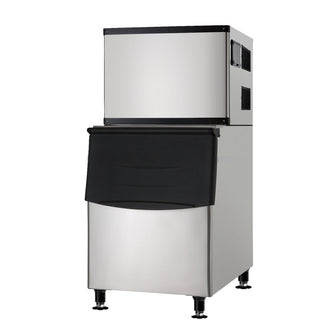
That last point shapes the setup. Many seafood restaurants run two supplies, or at least two separate bins, so that drinks ice and fish ice never mix. A high-output cube machine handles the volume. The model below makes 450 kg of cube ice a day into a 125 kg bin, with air or water cooling, and a stainless body that suits a wet kitchen.
Cube ice can be bruising on delicate fish, because the corners press into the flesh. Crushing it before it goes onto a display or under fillets gives a softer bed that packs around the product, and our ice crushers and shavers range covers the machines. Flake ice machines do the same job directly, but we do not currently list one, so the custom order route below is the way to source one.
Plan the drainage at the same time. Every kilo of ice becomes a liter of water, and a display, a raw bar and a walk-in all melting through service need floor drains in the right places. Our guide to choosing a commercial ice machine covers daily output and bin sizing, and the full range is in ice makers.
The display on ice is the first menu guests read
A fish counter at the entrance or beside the kitchen pass does a job no printed menu can. Guests see the size of the fish, the clarity of the eyes and the color of the gills, and they choose a whole bream or a portion of turbot on that basis. It also tells them the restaurant has nothing to hide.
The display has to keep fish cold while it is on show, not just look cold. A refrigerated case with an ice deck holds product at 0 to 4 °C, with the ice on top of a chilled base rather than doing all the cooling on its own. The open-top stainless model below uses direct cooling with automatic defrost and digital temperature control.
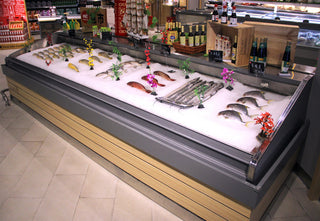
For a larger fish-market style table, the ice fish table is built as an open refrigerated cabinet for iced seafood, and more cases are in our display fridges collection.
Keep hot lamps away from the ice, since lighting should show the fish without warming it. The display also needs a routine. Fish goes back into the walk-in at the end of service, ice is discarded and replaced, and the case is cleaned before the next day. A display that stays stocked overnight is a food-safety risk and an inspection note.
Are live tanks worth the floor space?
A tank of lobsters or crabs sells shellfish better than any photograph, and it lets you guarantee the product is alive until the order is placed. It also brings a set of running tasks that many owners underestimate.
A live tank for cold-water shellfish is a small life-support system. It needs chilled salt water held at a steady temperature for the species, plus filtration and regular salinity checks. Someone has to inspect the animals daily, remove any that die and log it. Tanks also need water and drainage close by.
Animal welfare is a growing consideration as well. In the United Kingdom, the Animal Welfare (Sentience) Act 2022 recognizes decapod crustaceans, such as crabs and lobsters, as sentient beings, and guidance on handling and humane slaughter in kitchens continues to develop. Wherever you trade, plan how staff will store and dispatch live shellfish before you buy a tank, and check current local guidance.
For many restaurants the better route is to buy live shellfish for a single day's service and hold it in chilled storage, reserving a tank for a flagship site where it earns its space. We do not list live tanks in the catalog; if the format calls for one, the custom order form at the end of this article is how we source it.
How to open a seafood restaurant around steam and the grill
Fish cooks fast and overcooks faster, so a seafood line is built for control rather than raw power. Most menus rest on two methods, steam for shellfish and delicate fish, and high direct heat for grilled fish and a crisp skin.
Steam is the natural way to cook mussels and whole fish without drying them. A multi-tray steaming cabinet lets the kitchen run several batches at once. The six-tray model below handles 20 to 30 kg per load, which covers a busy mussels service.

A combi oven gives the same steam with more control over temperature and humidity, and it can roast a whole fish in the same cavity. Our comparison of a combi oven and a convection oven explains when the extra control is worth it, and the steamers collection covers steam kit on its own.
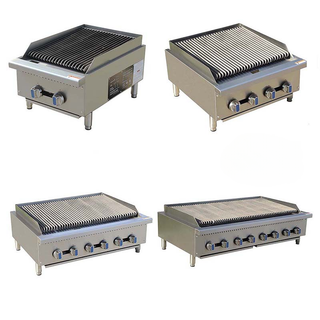
The grill is the other half. A charbroiler marks and chars fish quickly, and cooks who work it well learn to judge fish by the way the flesh turns opaque. The heavy-duty countertop unit below runs eight burners at up to 46.9 kW on natural gas or LPG.
A salamander finishes dishes from above, which makes it useful for gratinated oysters, glazing a fillet, or crisping skin without turning the fish. The gas model below is 128 cm wide and sits above the line.
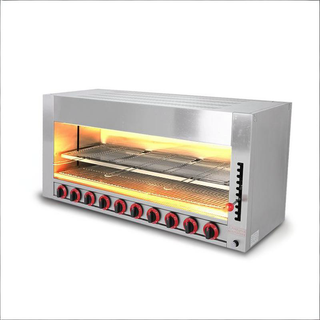
Grilling fish produces smoke and grease, so the extraction has to be sized for it. Our guide to sizing a kitchen exhaust hood covers the calculation, and our commercial grill guide compares the grill types. The grills and charbroilers collection lists the options.
Between the cold room and the line, the kitchen needs somewhere to keep the portions for the next hour. A refrigerated drawer unit under the pass holds prepped fish at 0 to 5 °C in GN pans, so cooks reach down instead of walking to the walk-in mid-service.

A fish room with its own knives and a blast freezer
Whole fish arrive gutted or ungutted, scaled or not, and they have to be broken down somewhere that is not the cooking line. A seafood restaurant needs a dedicated prep area for fish, with its own sink and boards, kept apart from produce and cooked food.
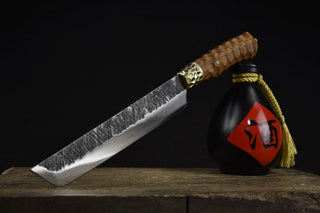
Filleting needs a thin, flexible blade that follows the bone. The knife below has a 22 cm blade in 7Cr17MoV steel on a rosewood handle.
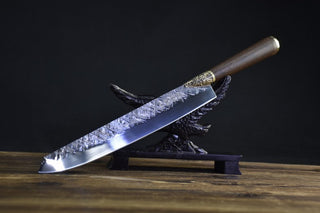
Raw courses need a long single-bevel slicer that cuts in one pull, so the surface of the fish stays glossy rather than torn. The yanagiba below has a 28 cm blade.
Our specialty and fish knives collection and the guide to knife types cover the rest of the set.
Any fish the kitchen serves raw, cured or lightly marinated has to be frozen first in most markets, for the reasons set out in the permits section below. A blast freezer is how a restaurant does this in-house. The unit below freezes from +75 °C to -18 °C in 240 minutes and reaches as low as -40 °C, depending on the configuration, in 3, 5 or 10 tray sizes. Because it pulls fish through the ice-crystal range quickly, it also does less damage to texture than a standard freezer.
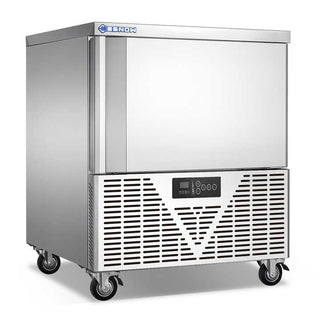
Our comparison of a blast freezer and a commercial freezer explains the difference, and cold rooms and walk-ins covers the main storage. For a primer on cabinet types, see commercial refrigeration explained, and browse blast chillers and freezers and walk-in cold rooms.
Oysters and the raw bar
Oysters are sold alive, and the way they are held decides whether they stay that way until they are opened. They are kept cold, cup side down, covered with a damp cloth, and never stored in fresh water or sealed airtight. Each batch keeps its supplier label, which matters for the records described below.
On a busy night the raw bar is only as fast as its shuckers. Train at least two people and build the station so they work over ice with the platter in front of them.
Presentation completes the sale. Oysters go out on crushed ice or on a plate shaped to hold each shell level, so the liquor stays inside. The porcelain plate below comes in three sizes in an irregular Japanese style.
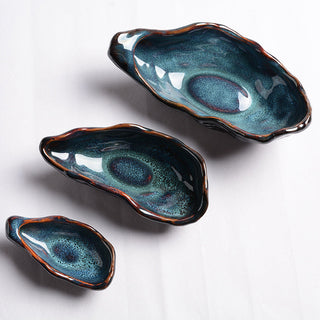
More shapes for raw courses are in specialty plates. For a menu that leans further into raw fish, our guide to opening a sushi bar covers counter service and fish handling in detail.
Warewashing matters more than it looks. Shells and platters come back in volume and smell if they wait. A hood-type dishwasher handling 16 dish sets per cycle keeps up with a raw bar service; see the hood and conveyor dishwashers range and our guide to choosing a commercial dishwasher.
Permits for raw fish and shellfish
A seafood restaurant needs the same approvals as any restaurant, plus two sets of rules that most kitchens never meet. Fish served raw has to be frozen to destroy parasites. Live shellfish has to come from approved waters, with labels or tags kept for inspection.
Raw fish is frozen before service
In the United States, the FDA Food Code requires fish served raw, raw-marinated or partially cooked to be frozen first. The options are -20 °C (-4 °F) or below for 7 days; or -35 °C (-31 °F) until solid and then held at -35 °C for 15 hours; or -35 °C until solid and then held at -20 °C for 24 hours. Freezing records must be kept for 90 days after the fish is served. Molluscan shellfish and certain tuna and farmed fish are exempt.
The United Kingdom and France, which applies EU hygiene law, set a shorter standard. Fish and cephalopods intended to be eaten raw must be frozen to -20 °C for at least 24 hours or -35 °C for at least 15 hours. Cold-smoked fish falls under the same rule when the smoking does not cook it through. Check which species and farmed products your authority exempts.
In Australia, raw-fish handling sits within your food safety program and the requirements of your state food authority and council. Ask your environmental health officer how they expect parasite control for raw and cured fish to be handled before you finalize the menu.
Shellfish from approved waters, with the tags kept
Oysters and mussels filter the water they grow in, so their safety depends on where they were harvested. In the United States, molluscan shellfish must come from approved sources, and the identification tag from each container has to be kept for 90 days after the container is emptied. In the United Kingdom and France, the label on each batch of live bivalve molluscs has to be kept for at least 60 days. In Australia, bivalves are produced under the Australian Shellfish Quality Assurance Program, which classifies harvest areas; in New South Wales, the Food Authority licenses shellfish farmers and controls where and when they can harvest. Buy only from suppliers who can show that paperwork.
The rest of the opening license
In Australia, register the food business with the council, gain premises approval and, in most states, appoint a Food Safety Supervisor; to serve drinks you need an on-premises liquor licence from the state or territory regulator, and every server needs a valid RSA card. In the United Kingdom, register as a food business at least 28 days before opening, expect a Food Hygiene Rating inspection, complete a fire risk assessment, and for alcohol hold a Premises Licence plus a Personal Licence for the Designated Premises Supervisor. In the United States, expect a business license, a health department permit, food-handler or ServSafe certification and a certificate of occupancy, with a state liquor license that is often the slowest step. In France, alcohol service requires the permis d'exploitation training and the right license class, a Licence III for wine and beer or the scarce Licence IV for spirits, alongside a food-business declaration and an HACCP plan.
Treat this as an overview, not legal advice, and confirm the current temperatures and exemptions with your local authority before you plan the raw menu.
Where seafood openings go wrong
- Sizing the ice machine for the bar. A machine chosen for drinks runs out by mid-afternoon once the display, the walk-in trays and the raw bar are drawing from it. Add up all four jobs before choosing the output.
- Forgetting the meltwater. Ice that melts onto a floor with no drain nearby turns the kitchen into a slip hazard and an inspection note. Place drains by the display, the raw bar and the fish room at design stage.
- Mixing fish ice and drinks ice. One bin for everything means ice that has touched raw fish ends up in a glass. Keep separate bins and scoops, and label them.
- Serving crudo without a freezing log. Freezing fish in a standard freezer with no record of time and temperature does not satisfy the rule. Use a blast freezer and log every batch.
- Throwing away shellfish labels. Tags and labels are the only way to trace a batch if a guest falls ill, and inspectors ask for them. File them by date.
- Buying a live tank for the look. A tank that nobody has time to monitor loses stock and becomes a welfare and hygiene problem. Buy one only when the menu and the staffing support it.
- Over-ordering fresh fish. Seafood keeps for days, not weeks. Order to real covers, rotate stock by date, and plan a dish that uses the previous day's fish before it is too late.
Planning the ice and the raw bar together? Send us your format, your expected covers and a sketch of the kitchen, and we will spec the cold chain from the delivery door to the pass, including anything we source to order, such as flake ice machines or live tanks.


